 08929816349
Adnexal Masses Treatment
Home > Specialities > Adnexal Masses Treatment
An Adnexal mass (Adnexal Tumor) is a growth that grows near your uterus (womb), generally in your ovaries, fallopian tubes, and neighboring connective tissues. The term “adnexa” refers to the ovaries, fallopian tubes, and ligaments that secure the reproductive organs.
These masses are noncancerous and do not always have symptoms and go away without treatment. However, treatment may become necessary if the mass is large, causing pain, or suspected of being cancerous.
If you experience severe pelvic pain, sudden abdominal discomfort with nausea or vomiting, abnormal bleeding, persistent bloating, or urinary/bowel changes; consult a trusted adnexal masses treatment in Jaipur for an accurate diagnosis and personalized care.
Cocoon Hospital offers advanced, minimally invasive treatments for adnexal masses, with our experts having a strong focus on fertility-preserving techniques and laparoscopic (keyhole) surgery. This helps ensure shorter hospital stays and quicker returns to daily activities.
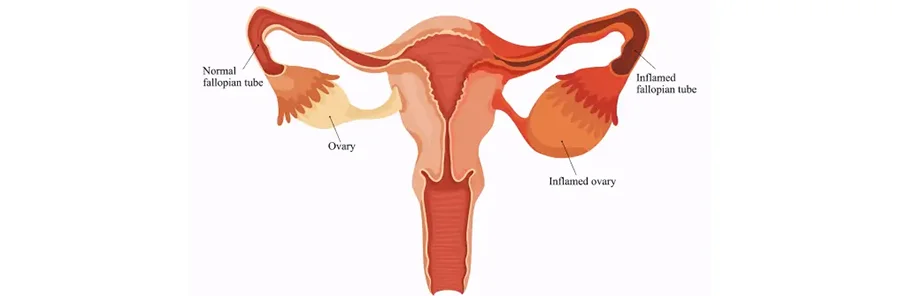
What Are Adnexal Masses ?
The term "adnexal mass" refers to anyz lump or growth found in the adnexa of the uterus, which includes:
- Ovaries
- Fallopian tubes
- Surrounding connective tissues
Adnexal masses can vary in size, nature, and cause. They may be discovered during routine checkups or while evaluating symptoms like pelvic pain or infertility.
Common Causes of Adnexal Masses
There are many gynecologic and nongynecologic conditions that can cause adnexal masses. Most commonly, the tumors begin in your reproductive organs (gynecologic). However, the masses can also originate in your urinary or digestive systems (nongynecologic).
| Category of Cause | Specific Causes | Details |
|---|---|---|
| Functional Ovarian Cysts | Follicular cysts, Corpus luteum cysts | Most common cause of adnexal mass; these cysts usually form during the menstrual cycle and often resolve spontaneously. |
| Benign Neoplasms (Tumors) | Teratomas (Dermoid cysts) | Very common benign ovarian tumors containing different tissue types (hair, fat, etc.). |
| Benign Neoplasms (Tumors) | Endometriomas | “Chocolate cysts” caused by endometriosis with old blood accumulation. |
| Benign Neoplasms (Tumors) | Fibromas | Solid benign tumors arising from ovarian connective tissue. |
| Gynecologic Infections / Conditions | Tubo-ovarian abscess | Pus-filled inflammatory mass usually resulting from Pelvic Inflammatory Disease (PID). |
| Gynecologic Infections / Conditions | Hydrosalpinx | Fallopian tube becomes blocked and filled with fluid. |
| Gynecologic Infections / Conditions | Polycystic Ovary Syndrome (PCOS) | Ovaries contain multiple small cysts due to hormonal imbalance. |
| Pregnancy-Related | Ectopic pregnancy | Pregnancy develops outside the uterus, most often in the fallopian tube. |
| Pregnancy-Related | Corpus luteum cyst in pregnancy | Normal cyst that forms during early pregnancy to support hormones. |
| Malignancy (Cancer) | Ovarian, fallopian tube, or metastatic cancers | Malignant tumors; risk increases in postmenopausal women. |
| Other Causes | Pedunculated fibroids | Uterine fibroids attached by a stalk that may mimic an adnexal mass. |
| Other Causes | Ovarian torsion | Twisting of the ovary that cuts off blood supply; a surgical emergency. |
Symptoms of Adnexal Masses
Some adnexal masses do not cause symptoms, while others may present with:
- Pelvic or lower abdominal pain
- Abdominal bloating or fullness
- Irregular menstrual cycles
- Pain during intercourse
- Frequent urination
- Difficulty in conceiving
Sudden severe pain may indicate complications like torsion or rupture and requires immediate medical attention.
Diagnosis of Adnexal Masses
At Cocoon Hospital, our gynecologists and obstetricians perform a detailed evaluation using a systematic and accurate approach:
- Detailed medical history and pelvic examination
- Transvaginal ultrasound (TVUS) is the first-line imaging modality to assess for malignancy risks like solid components, thick septations, and vascularity.
- Doppler studies (to assess blood flow)
- Laboratory tests, such as CA 125, are used to evaluate potential ovarian cancer
- MRI or CT scan for complex masses
The goal is to determine whether the mass is benign or malignant and decide the safest treatment.
Benign vs Malignant Adnexal Masses
Benign Adnexal Masses
- More common
- Slow-growing
- Often managed conservatively or with planned surgery
Malignant Adnexal Masses
- Less common
- May grow rapidly
- Require prompt surgical intervention and further oncological care
Early diagnosis significantly improves outcomes.
Adnexal Masses Treatment Options in Jaipur
Experts at Cocoon Hospital may offer treatment tailored depending on the following factors:
- Nature of the mass
- Size and growth pattern
- Symptoms
- Age and fertility plans
- Risk of malignancy
Medical Management
Small, simple, and asymptomatic masses may be managed with:
Observation and follow-up scans
Symptom control
Medical treatment is suitable only for selected benign cases.
Surgical Treatment for Adnexal Masses
Surgery is recommended when:
- The mass is large or persistent
- Symptoms are severe
- There is a risk of torsion or rupture
- Malignancy cannot be ruled out
Adnexal Mass Surgery (Laparoscopic or Open)
Most adnexal mass surgeries are performed using laparoscopic (minimally invasive) techniques, depending on the case. Small incisions (0.5–1.5 cm) are made for a camera and instruments to remove the mass (cystectomy) or the ovary (oophorectomy).
Benefits of Laparoscopic Surgery:
- Smaller incisions
- Less pain and blood loss
- Faster recovery
- Minimal scarring
- Short hospital stay
Open surgery (laparotomy) may be chosen for large masses, adhesions, or pregnancy complications. A larger, traditional incision is made, generally in the lower abdomen.
Adnexal Mass Surgery Procedure – Step by Step
Here are the things that you can expect during and after the surgery:
- Pre-operative investigations and fitness assessment
- Surgery under general anesthesia
- Removal of the mass with preservation of healthy tissue (whenever possible)
- Histopathological examination
- Post-operative monitoring and recovery
Surgeries at Cocoon Hospital are performed by experienced gynecologists following standardized safety protocols.
Recovery After Adnexal Mass Surgery
The recovery may vary from person to person based on the type and severity of the condition:
- Laparoscopy (Minimally Invasive): Usually 1–2 weeks to return to normal activities.
- Laparotomy (Open Surgery): 4–8 weeks for full recovery, often requiring a 2–4 day hospital stay.
Adnexal Masses Surgery Cost in Jaipur
The adnexal mass surgery cost in Jaipur depends on:
- Size and complexity of the mass
- Surgical approach (laparoscopic/open)
- Diagnostic tests and hospital stay
- Post-operative care requirements
Approximate cost range:
₹50,000 – over ₹1,30,000
The exact cost is discussed transparently after a detailed evaluation.
Why Choose Cocoon Hospital for Adnexal Masses Treatment in Jaipur?
Located at the heart of Jaipur, Cocoon Hospital is the leading provider of gynaecological services, including adnexal masses surgery. Our experts focus on combining minimally invasive “keyhole” cutting-edge technology tailored for every woman.
Our multidisciplinary team blends clinical expertise with a patient-first approach for the best clinical outcome and recovery.
Heres what sets us apart:
- Women-Centric Focus
- Experienced Surgical Team
- Modern Diagnostic Tools and Laparoscopic Equipment
- Post-Operative Support and Follow-Up Care
- We Have Performed Over 10,000+ Gynecological Surgeries
Ready to Get the Right Adnexal Mass Treatment in Jaipur
Speak to our team for expert guidance at 08929816349.
Our Address: Airport Plaza, Tonk Rd, Chandrakala Colony, Mata Colony, Jaipur, Rajasthan
FAQs
Are Adnexal masses always cancerous ?
No. Most adnexal masses are benign, but proper diagnosis is important to know is the masses are turning into malignancy.
Do all Ovarian Cysts need Surgery ?
No. Small, simple masses may be monitored, but surgery is advised for large or symptomatic masses.
Is Adnexal mass Surgery safe ?
Yes. When performed by experienced surgeons, adnexal mass surgery is safe and effective.
Will Surgery affect Fertility ?
In most cases, fertility is preserved, especially with laparoscopic surgery.
How long does Adnexal mass Surgery take ?
The procedure usually takes 1–2 hours, depending on complexity.
When should I consult a doctor for Adnexal masses ?
If you have pelvic pain, bloating, or abnormal scan findings, consult a gynecologist promptly.
Medically Reviewed & Updated
Reviewed by Dr. Himani Sharma, Senior Consultant & Clinical Head, Obstetrics & Gynecology, on 03 May 2026.