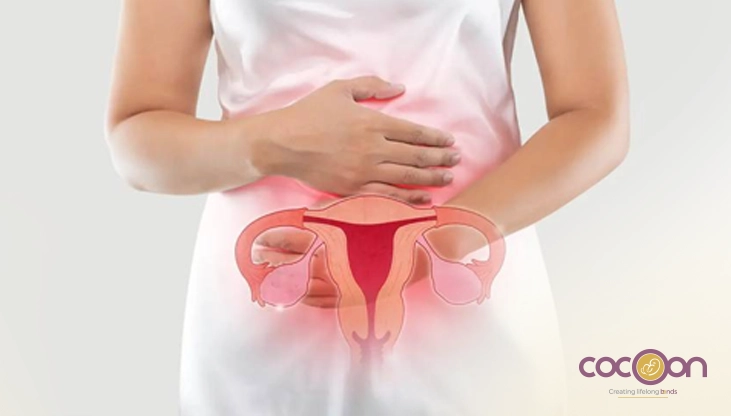
 08929816349
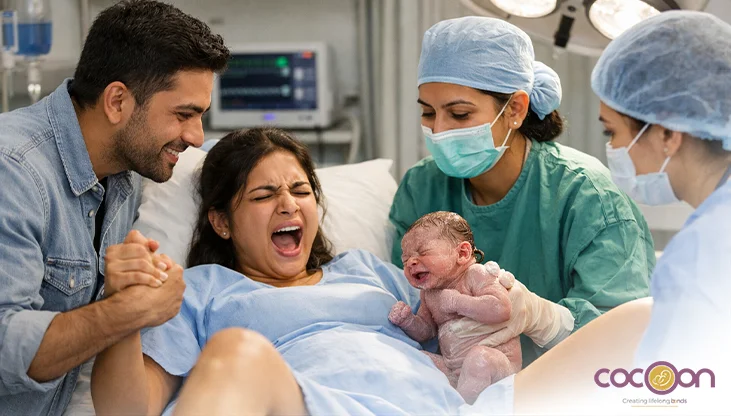
Are you a mother in Jaipur who has had a previous C-section delivery? But this time, you are hoping for a natural vaginal birth, and you might have a lot of queries like: “Is a natural birth after a C-section possible?”
Yes, after a detailed review of the type of incision used, health history, and ongoing medical conditions, a vaginal birth after cesarean (also known as VBAC) is possible.
Cocoon Hospital, a leading VBAC Delivery Hospital, helps in safe childbirth through advanced technologies like advanced maternal and fetal monitoring systems for continuous tracking during VBAC. We are backed by GE's 4D ultrasound scanners, fetal Doppler, and CTG machines to improve fetal assessment, guide decisions in labor, and reduce risks for both mother and baby. Cocoon’s multidisciplinary team, backed by high‑end obstetric care, has achieved the milestone of 18,000 deliveries and 17,000 babies born at the facility.
What is Vaginal Birth After Cesarean (VBAC)
A vaginal birth after cesarean or VBAC, is when an expecting woman gives birth through the vagina after previously having a cesarean section delivery. The main purpose of a VBAC is to give a mother who had a C-section the chance to have a vaginal delivery for her next pregnancy.
But this is not a quick decision to agree on; it takes several factors into consideration to come to the conclusion of whether it will be safe for you or not.
Mothers attempting VBAC generally undergo a trial of labor after cesarean (TOLAC), a typically safe practice associated with a 60% to 80% success rate.
Below are the decision-making factors taken into consideration:
- Low-transverse uterine incision
- Maternal BMI
- Gestational age
- Fetal weight
- Impact of prior cesarean deliveries on uterine rupture risk
- Likelihood of successful vaginal birth after cesarean delivery
- The position of the fetus
- Ongoing medical conditions
- Previous birth history
- The onset of natural labor
Benefits of VBAC
Experts at the Best VBAC delivery hospital say if the mother comes under the eligibility criteria, it may provide the following benefits:
- Faster recovery
- Shorter hospital stay
- Decreased risk of heavy bleeding and infection
- It helps prepare the newborn to breathe oxygen after birth by clearing amniotic fluid from the baby’s lungs as it passes through the birth canal.
- Better development of the baby’s immune system as it passes through the birth canal during a vaginal delivery.
Is VBAC Right for You? The Eligibility Criteria?
Not every pregnant woman is a candidate for normal delivery after a C-section, however, our expert team at the leading VBAC delivery hospital in Jaipur performs comprehensive assessments to determine your suitability.
Common eligibility factors include:
1. Uterine Incision Type
A single previous low‑transverse (horizontal) uterine incision is generally acceptable.
2. No History of Uterine Rupture
A history of uterine rupture can be considered a major contraindication.
3. Previous Delivery History
A past successful vaginal birth (either before or after the C-section) can increase the chances.
4. Non-Recurring Reason or Risk Factors For Past C-Section
The reason for the previous C-section, such as breech presentation (when a baby's feet or buttocks are positioned to come out of the vagina first), fetal distress, etc., should not be there at the present pregnancy.
5. Adequate Maternal Pelvis
The mother's pelvis must be large or spacious enough to allow safe passage of the baby.
6. Baby's Position
The baby must be in head-down (vertex) presentation for VBAC to be considered.
7. No Prior Uterine Surgery
Surgeries like fibroid removal (myomectomy) can raise rupture risk and often disqualify VBAC.
Is VBAC Safe After 3 C-Sections?
Yes, normal vaginal delivery after 3 C-sections is possible and safe if you fulfill the eligibility criteria. The overall success rate ranges from 60% to 80%.
However, it carries potential risks, including uterine rupture, which may result in maternal and neonatal complications. Other risks may include an emergency C-section, blood loss, and infection. Experts at VBAC hospitals lower these risks and take necessary actions on time for the safety of the child and mother.
Here are some favorable factors for the success of VBAC:
- Going into labor naturally, without induction.
- A smaller baby size.
- Pregnancy spacing of 18 months to 2 years to allow better uterine healing.
Best VBAC Delivery Hospital Near Me in Jaipur | Cocoon Hospital
Cocoon tops the list of Jaipur's VBAC delivery hospitals, combining cutting-edge technology with compassionate care tailored for every mother.
Here's what sets us apart:
- Continuous Electronic Fetal Monitoring (EFM/CTG) detects early signs of distress associated with potential uterine rupture.
- 3D and 4D Ultrasound for prenatal assessment.
- Safe environment for Trial of Labor After Cesarean (TOLAC).
- Continuous tracking during VBAC trials.
- A multidisciplinary dedicated VBAC support team, which includes obstetricians, anesthesiologists, neonatologists, and doulas.
- Personalized VBAC preparation program, which includes breathing techniques and pain management, nutrition for optimal pelvic health, and partner involvement for emotional support.
What People Say About Us
You can watch the memorable experience of Mrs. Harvinder Kaur welcoming her baby boy at Cocoon Hospital.
Ready for Your VBAC Success Story?
Speak to our team for expert guidance at 08929816349.
Our Address: Airport Plaza, Tonk Rd, Chandrakala Colony, Mata Colony, Jaipur, Rajasthan
FAQs
Q1: How to prepare for Vaginal Birth After a C-section?
A: First, discuss your eligibility criteria with your doctor and then follow their advice on a healthy lifestyle (diet and exercise) to manage weight and attend specialized prenatal classes.
Q2: Is VBAC or C-section safer?
A: The safest option for you will be decided by your doctor only. Generally, a planned Vaginal Birth After Cesarean (VBAC) is considered a safe and appropriate option for many mothers.
Q3: What is the safest method of delivery?
A: The safest method of delivery depends entirely on the health condition of the mother and baby. Generally, vaginal (normal) delivery is considered safer, having quicker recovery, but when complications occur, C-sections become the safer one.
Q4: What is the success rate of VBAC after 3 C-sections?
A: The success rate may vary based on the health condition of the mother and baby; it generally ranges between 60% and 80%.
Q5: Can you do a VBAC without an epidural?
A: Yes, you can have a VBAC (vaginal birth after cesarean) without an epidural. Breathing and relaxation methods and other natural or non‑epidural pain‑management techniques can be used for pain relief during labor.
Q6: Who is not eligible for VBAC?
A: Women with the following circumstances are usually not eligible, but your doctor will take the final call:
- If you have a prior classical or T‑shaped uterine incision.
- a history of uterine rupture, placenta previa, and/or certain uterine surgeries.
- Other contraindications to vaginal delivery.