 08929816349

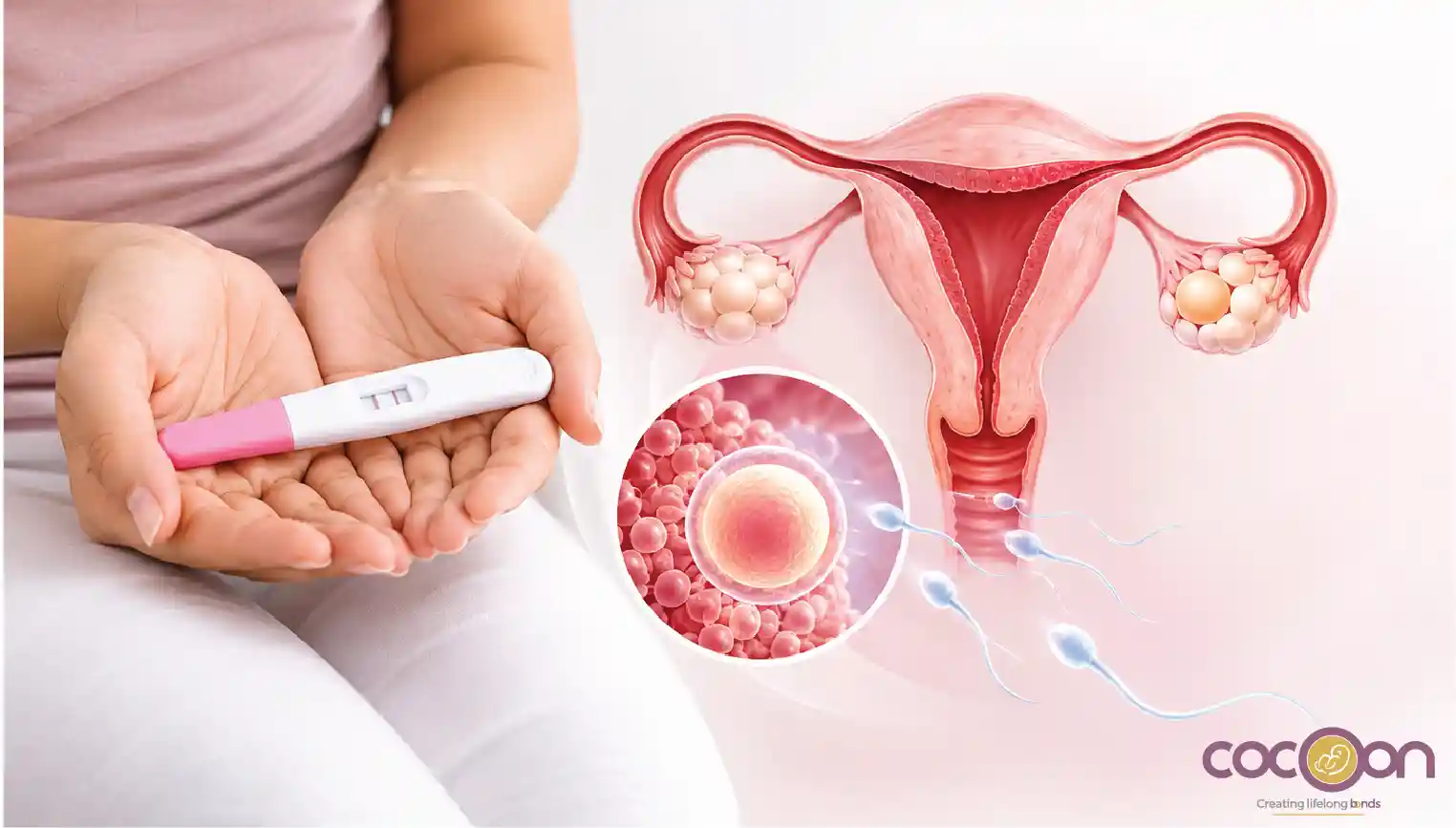
If you are trying to conceive and have been recommended to undergo a fertility test, you may have several questions in your mind like: What is the fertility test normal range? What should my AMH or FSH level be? What is a normal sperm count? And does an abnormal result mean I cannot get pregnant?
The short answer is: there is no single fertility test or number that can tell whether you can or cannot conceive.
Fertility evaluation generally takes several factors or parameters into consideration for an accurate diagnosis, such as:
For Women:
- Ovulation and ovarian reserve
- Reproductive hormones
- The uterus and fallopian tubes
AMH, FSH and other tests in females can provide useful information, but they do not measure egg quality or independently predict the chance of natural pregnancy.
For Men:
The primary male fertility test is a semen analysis, which evaluates sperm count, motility (movement), and morphology (shape) in a laboratory.
Fertility testing helps your doctor look at the complete picture rather than relying on one report value.
Quick Answer: What Are the Normal Fertility Test Ranges?
Normal fertility test ranges differ slightly by laboratory, testing kit, and clinical context.
The following table gives the standard reference values for female hormone tests, male hormone tests, and semen analysis.
| Fertility test | Common reference/value | What it helps assess |
| AMH | Often around 1–3 ng/mL in many general references. | Ovarian reserve |
| FSH, early follicular phase | Approximately 3–10 mIU/mL is commonly used as a reference in fertility assessment. | Ovarian function/reserve |
| Estradiol, early cycle | Approximately 25–75 pg/mL. | Ovarian activity |
| TSH | Approximately 0.4–4.0 mIU/L. | Thyroid function |
| Semen volume | ≥1.4–1.5 mL is commonly used depending on reference system. | Semen quantity |
| Sperm concentration | ≥15–16 million/mL is around the lower reference range. | Number of sperm |
| Total sperm number | Around ≥39 million per ejaculate. | Total sperm count |
| Total motility | Around ≥40%. | Sperm movement |
| Progressive motility | Around ≥30–32%. | Forward-moving sperm |
| Normal morphology | Around ≥4%. | Sperm shape |
Note: These fertility test ranges, or values, should not be treated as universal pass or fail limits. Your laboratory may use different reference intervals, and your fertility specialist will interpret them along with your age, symptoms, medical history and other test results.
What Is a Fertility Test?
A fertility test is a group of investigations that your fertility specialist uses to find out why you’re having difficulty conceiving.
Fertility experts usually order fertility testing if:
- You’re under 35 years of age and have not conceived after 1 year of unprotected intercourse.
- You’re over 35 years of age and haven’t conceived after 6 months of unprotected intercourse.
- You have irregular cycles (cycles that are more than 35 days apart).
For women, fertility evaluation may include:
- AMH test
- FSH and estradiol testing
- Thyroid-stimulating hormone (TSH)
- Ovulation assessment
- Antral follicle count (AFC)
- Pelvic or transvaginal ultrasound
- Tests to check whether the fallopian tubes are open, when indicated
For men, the most common initial investigation is semen analysis, which evaluates sperm concentration, movement and morphology.
A fertility evaluation may also consider the uterus (womb), fallopian tubes, period pattern, previous pregnancies, age, underlying conditions and medical history.
The American Society for Reproductive Medicine (ASRM) recommends evaluating both partners when appropriate rather than focusing only on the woman.
AMH Normal Range: What Does Your AMH Level Mean?
An AMH test is commonly used to assess ovarian reserve; it measures levels of anti-mullerian hormone, which corresponds to your egg count.
In simple terms, the AMH test tells the experts the number of eggs remaining in the ovaries.
A commonly cited general range is around 1.0–3.0 ng/mL. But keep in mind AMH values vary considerably with age, laboratory methods and individual factors.
| AMH level | General interpretation |
| Around 1–3 ng/mL | Often considered within a commonly cited range. |
| Below 1 ng/mL | May suggest lower ovarian reserve. |
| Very low AMH | May indicate diminished ovarian reserve and needs clinical assessment. |
| Higher AMH | May indicate a higher ovarian reserve; can also occur in conditions such as PMOS (formerly known as polycystic ovary syndrome (PCOS)). |
Note: A low AMH does not automatically mean infertility, and it should not be used alone to predict whether a woman will conceive naturally.
FSH Normal Range and Fertility
FSH, or follicle-stimulating hormone, is a hormone your pituitary gland makes and releases. FSH plays a role in sexual development and reproduction. It affects the function of ovaries and testicles.
It is often measured during the early part of the menstrual cycle, commonly around days 2–4, when assessing ovarian reserve.
A commonly used early-follicular reference is approximately 3–10 mIU/mL, although laboratory ranges vary.
Higher FSH levels can be linked to reduced ovarian reserve, especially when interpreted together with other findings. However, FSH can fluctuate between cycles; that’s why it is advised that one result should not be viewed in isolation.
In fact, AMH is usually viewed as a more sensitive marker of ovarian reserve than early-cycle FSH. Together, these two may give complementary information.
Other Hormone Levels Checked During Fertility Testing
Depending on the individual's symptoms and medical history, a fertility expert in Jaipur may recommend additional hormone tests.
- Estradiol (E2): To assess ovarian activity and interpretation of early-cycle FSH.
- Thyroid-stimulating hormone (TSH): To assess thyroid function, as it can affect reproductive health.
- Progesterone: To check evidence of ovulation when clinically indicated.
- Prolactin: May be checked when irregular periods, absent periods or milk discharge are present.
- Luteinizing hormone (LH): To help assess ovulation or specific hormonal conditions.
Semen Analysis: What Is a Normal Sperm Count?
For men, semen analysis is one of the most important initial fertility investigations.
A semen analysis examines a semen sample under a microscope to evaluate:
- How much sperm is in your semen (sperm count).
- Sperm activity (motility).
- Sperm shape (morphology).
It checks several characteristics of semen and sperm, including:
- Semen volume
- Sperm concentration
- Total sperm number
- Total motility
- Progressive motility
- Sperm morphology
- In some reports, vitality and other parameters
A sperm concentration of around 15 million sperm/mL or higher and a total sperm number of around 39 million or higher per ejaculate have traditionally been used as lower reference points in commonly cited fertility ranges.
Sperm Count Normal Range: What Should You Look For?
Below is the general reference; do not assume that being below a reference value means that pregnancy is impossible. Similarly, a result within the reference range does not guarantee fertility.
| Semen parameter | Common lower reference point |
| Semen volume | About 1.4–1.5 mL |
| Sperm concentration | About 15–16 million/mL |
| Total sperm number | About 39 million/ejaculate |
| Total motility | About 40% |
| Progressive motility | About 30–32% |
| Normal morphology | About 4% |
FAQs About a Fertility Test Normal Range
When should you consider a fertility test?
Most fertility specialists recommend getting tested if you and your partner have been unable to conceive after one year of having unprotected intercourse on a regular basis.
How are fertility test results interpreted?
Fertility test results are interpreted together, considering patterns in hormone levels, ovarian reserve, sperm health, thyroid function, age, medical history, and other findings.
For example:
- Low AMH may suggest reduced ovarian reserve but does not by itself diagnose infertility.
- Higher FSH may suggest reduced ovarian reserve, particularly when supported by other findings.
- Low sperm concentration may reduce the chances of natural conception but does not necessarily mean pregnancy cannot happen.
What can affect fertility test results?
Age, menstrual cycle timing, hormonal medications or contraception, PMOS and other reproductive conditions, thyroid disorders, certain medical treatments, recent illness or fever, laboratory testing methods and semen collection and testing conditions; all these factors can influence fertility-related test results.
Can low AMH mean I cannot get pregnant?
No.
Low AMH does not automatically mean you cannot conceive. AMH mainly gives information about ovarian reserve and can help with personalised fertility-treatment planning.
What is a normal sperm count?
A commonly used lower reference point is approximately 15–16 million sperm per mL, with a total sperm number of about 39 million or more per ejaculate.
Conclusion
There is no single normal fertility test result. Fertility is assessed by taking multiple factors into consideration, including ovarian reserve, ovulation, reproductive anatomy and semen parameters.
So, if your report shows AMH, FSH, or sperm count outside a commonly quoted range, do not panic and do not self-diagnose. Let your fertility specialist interpret the result in the right clinical context and suggest the next appropriate step.
When to Contact a Fertility Expert in Jaipur
You should contact a fertility expert based on your age, how long you have been trying to conceive, or if you have specific medical conditions.
Timeline to consult:
- You’re under 35 years of age and are unable to conceive after one year of unprotected physical intimacy.
- You’re over 35 years of age and haven’t conceived after six months of unprotected physical intimacy.
- If you are 40 years or older, contact the expert immediately upon starting to try to conceive.
You do not need to wait for the standard time limits if you or your partner experience any of these red flags: irregular cycles (cycles that are more than 35 days apart), recurrent miscarriage, or male factor concerns (known or suspected sperm abnormalities or erectile/ejaculatory difficulties).
Disclaimer: This blog is for educational purposes only and should not be mistaken for medical advice. Consult a qualified fertility specialist for personalised evaluation and treatment.
References
- https://my.clevelandclinic.org/health/diagnostics/22681-anti-mullerian-hormone-test
- https://my.clevelandclinic.org/health/articles/fertility-test
- https://www.healthline.com/health/mens-health/normal-sperm-count#summary
- https://my.clevelandclinic.org/health/diagnostics/22681-anti-mullerian-hormone-test
- https://americanpregnancy.org/getting-pregnant/how-to-understand-your-fertility-tests/