 08929816349

Sometimes women notice a small lump near the opening of the vagina and wonder if it's something serious. There is a good chance that it is nothing but a painless or painful lump known as a Bartholin cyst (a type of vaginal cyst). It’s named after the Bartholin glands, which are two small glands (located on either side of the vagina) that secrete a fluid that helps lubricate the vagina.
Even though it's harmless, you need to consult your doctor to know the underlying cause and know if there is any need for medical intervention.
Bartholin cysts are not dangerous; small, painless, and non-infected cysts often resolve with simple treatment. However, if the cyst becomes infected, it can turn into a painful abscess that needs medical attention. Therefore, treatment for a Bartholin cyst should be directed by your healthcare provider. Even if it’s a treatment option you can do at home, it’s best to discuss with your provider first.
Read Also: Ovarian Cyst Surgery in Jaipur – Laparoscopic Treatment and Cost
Overview of Bartholin Cysts
| Feature | Details |
| How it happens | It occurs when a blockage happens at the openings of one of the Bartholin glands, causing the fluid to build up and form a lump. |
| Alternative names | Bartholin’s gland cyst, Bartholin duct cyst, or vulvar cyst. |
| Location | Forms on either side of your labia (vaginal lips) near the opening of your vagina. |
| Cause | The exact cause is unknown; some possible causes of Bartholin cysts are injury, irritation, or extra growth of skin in the vulvar area of the vagina; bacterial infections; and sexually transmitted infections (STIs). |
| What does a vaginal cyst look like? | Round, solid bumps under the skin on the lips of the vagina (labia). |
| Size | Pea-sized to golf ball-sized. |
| Pain | Usually painless unless infected. |
| Common Age | Between 20 and 40 years old. |
| Cancer Risk | Extremely rare, but evaluation is recommended after age 40. |
| Can It Burst? | Yes, sometimes it drains on its own. |
Read Also: Ovarian Cysts: What Causes Them & How To Manage Symptoms
What Is a Bartholin Cyst?
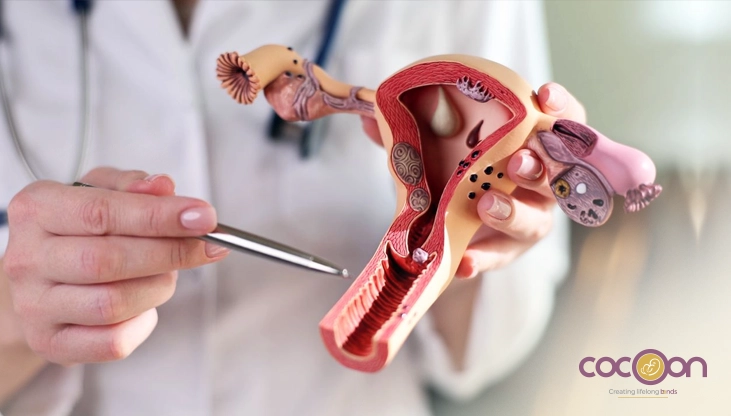
Bartholin’s gland cyst (or vulvar cyst) is a type of vaginal cyst that forms on either side of the labia (vaginal lips) near the opening of the vagina.
It occurs when there is a blockage at the openings of one or both Bartholin’s glands (located on either side of the vagina), leading to fluid buildup or a lump formation.
Under normal conditions, Bartholin glands produce a fluid that helps lubricate your vagina, but in case of blockage, a lump is formed.
Here is the simple explanation:
Normal Bartholin glands that are located on either side of the vagina → Produces fluid to lubricate the vagina → Opening of these gland becomes blocked → Fluid cannot drain properly → Fluid starts building inside the gland → A painless lump (Bartholin's cyst) forms → If bacteria enter the trapped fluid → Infection develops → Bartholin's abscess (painful, swollen, pus-filled lump)
Read Also: Ovarian Cyst, Adnexal Mass & Tubal Blocks: Understanding Fertility Barriers
Causes of Bartholin Duct Cyst
Many women Google a very common question: "What are Bartholin cyst causes?" The simple answer is blockage of Bartholin’s gland, as mentioned above.
But how this blockage happens is unknown; some possible causes are:
- Injury, irritation, or extra growth of skin in the vulvar area of the vagina.
- Chlamydia or gonorrhea
- Other sexually transmitted infections (STIs).
- Bacterial infections such as Escherichia coli (E. coli).
Read Also: Infertility in Jaipur: How Fibroids, Endometriosis & Ovarian Cysts Affect Pregnancy
What Are the Symptoms of a Bartholin Cyst?
Many vulvar cysts are small and don’t cause symptoms other than minor irritation. But, if bacteria enter the trapped fluid, the cyst may become infected and turn into a Bartholin's abscess, which can lead to symptoms such as the following:
- Discomfort and pain during intercourse, walking, sitting, or when inserting a tampon or wiping after peeing.
- Swelling and tenderness in the area.
- Fever or chills.
- Redness.
- Drainage from the cyst.
- The cyst gets larger.
Small Cyst Vs. Infected Cyst (Abscess) Symptoms
| Symptom | Small Cyst | Infected Cyst (Abscess) |
| Lump near vaginal opening | ✔ | ✔ |
| Pain | Mild or none | Severe |
| Walking discomfort | Sometimes | Common |
| Pain during intimacy | Possible | Very common |
| Fever | No | Yes |
| Pus drainage | No | Sometimes |
| Redness and swelling | Mild | Significant |
Is Bartholin Cyst Dangerous?
No.
It's typically harmless and doesn't cause serious complications.
However, complications can occur if:
- The cyst becomes infected
- It repeatedly returns
- The swelling grows rapidly
- It causes severe pain
It is wise to see a gynecologist promptly to know the severity of the condition and have peace of mind.
How Is a Bartholin Cyst Diagnosed?
Your doctor will:
- Ask about your symptoms
- Examine the lump
- Check for signs of infection
Additional tests may be conducted only in certain situations.
- Sexually transmitted infection (STI) testing.
- Culture of pus from an abscess.
- Biopsy for women over 40 or those with unusual lumps.
What Are the Treatments for a Bartholin Duct Cyst?
Wondering “how to cure a Bartholin cyst.” Treatment depends on the symptoms. If a cyst is small, painless, and doesn’t appear infected, it may not need treatment.
Medical intervention is required when the symptoms persist or the cyst grows and there is risk of developing an abscess.
Treatment options may include:
- Sitz baths
- Pain medications
- Antibiotics
- Surgical draining
- Marsupialization
- Removal of the Bartholin gland (In extremely rare cases)
| Treatment | What it includes |
| Sitz baths | Sit in a bathtub with 3 to 4 inches of warm water a few times a day for several days. This helps relieve pain and promote drainage. |
| Over-the-counter (OTC) pain medications | Acetaminophen or ibuprofen as directed for pain. |
| Antibiotics | Your doctor may prescribe antibiotics if the cyst becomes infected or if the test confirms a sexually transmitted infection. |
| Surgical draining | Incision and drainage under local anesthesia for painful/infected cysts. |
| Marsupialization | Drain cyst and suture edges to create a permanent pouch. |
| Gland removal | Excision of the Bartholin gland under anesthesia for recurrent or resistant cases. |
A Quick Comparison of the Treatment
| Treatment | Best For | Success Rate |
| Warm sitz bath | Small painless cyst | High for mild cases |
| Pain relievers | Symptom relief | Temporary |
| Antibiotics | Infected cyst | Only when infection is present |
| Word catheter | First infected abscess | Excellent |
| Marsupialization | Recurrent cysts | Excellent |
| Gland removal | Rare recurrent cases | Where other treatment isn’t working |
Do Bartholin Cysts Go Away on Their Own
Yes, small Bartholin cysts often resolve without treatment.
Here are the Helpful Home Measures:
- Warm sitz baths
- Good intimate hygiene
- Wearing breathable cotton underwear
- Avoiding harsh soaps or vaginal douching
- Staying hydrated
Conclusion
A Bartholin cyst is a common gynaecological condition in people between 20 and 40 years old. It can feel alarming at first, but it is generally manageable with the right care. Treatment may not be necessary if you don’t have symptoms and the cyst isn’t bothering you.
But if there is a chance of the situation worsening, early diagnosis and appropriate treatment can alleviate discomfort and rule out rare but serious conditions.
Hence, seek medical attention if:
- The lump becomes very painful.
- You develop fever or chills.
- Pus begins draining from the swelling.
- The cyst keeps returning.
- Home treatment does not help within 2–3 days.
- You're over 40 and notice a new Bartholin gland lump.