 08929816349
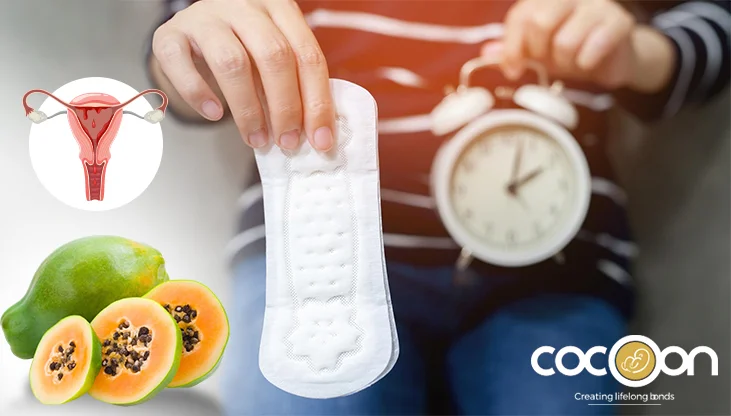
Are you wondering how to get periods fast, how to get periods faster, or looking for home remedies to get periods fast at home?
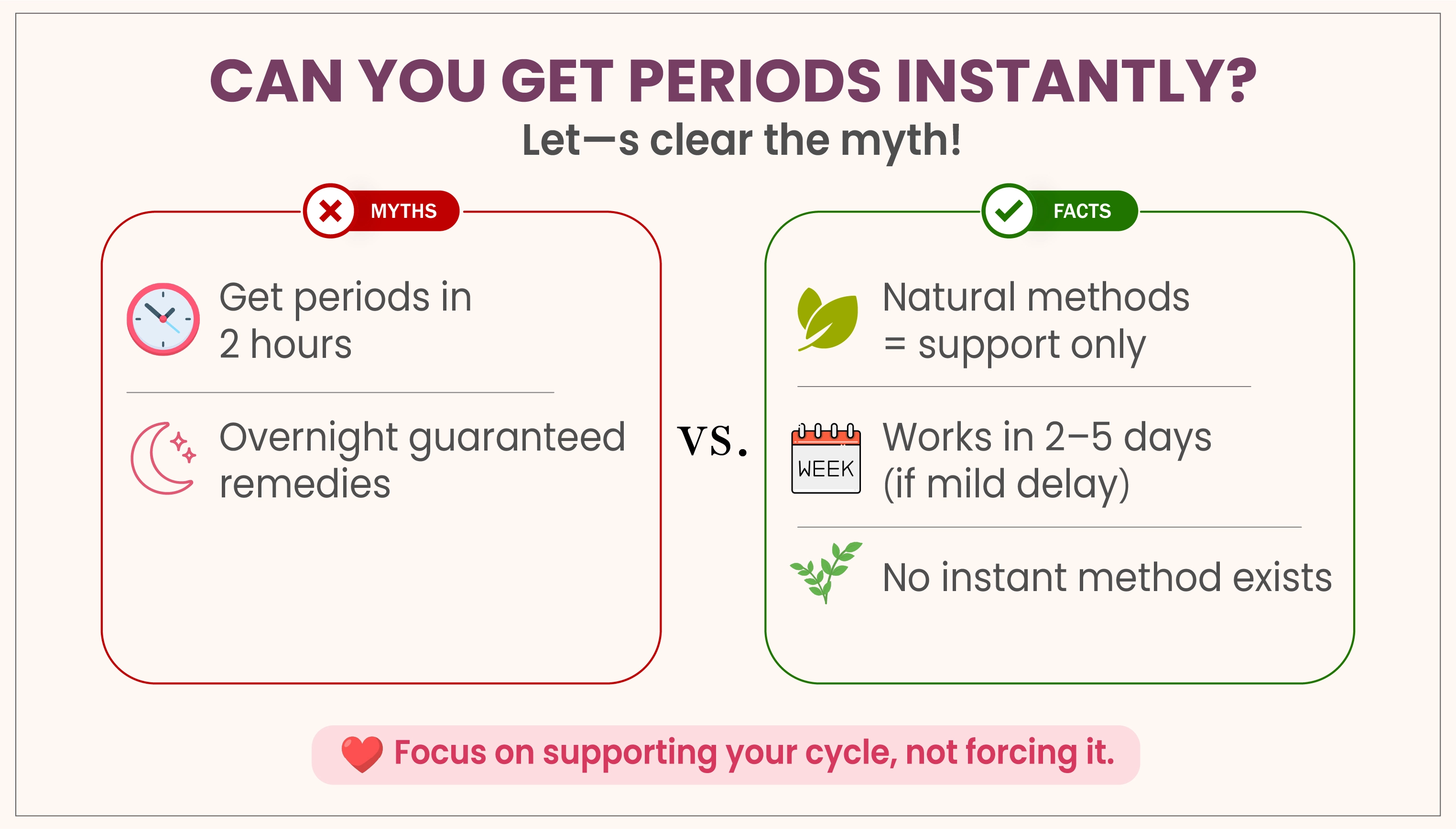
There is no safe way to start your period overnight or in 2 hours. However, certain lifestyle habits, natural foods, and gentle exercises can sometimes help a mildly delayed period arrive a little sooner, especially when the cause is stress, minor lifestyle changes, or mild hormonal fluctuations. Simple steps like eating papaya, ginger, or sesame seeds, staying well-hydrated, practicing yoga poses such as butterfly pose or deep squats, taking warm baths, managing stress through meditation, and maintaining regular sleep can support your body’s natural cycle.
If your period is more than 7 days late, or you’ve missed 3 cycles, it’s important to rule out pregnancy and medical causes like PCOS or thyroid problems with a gynaecologist.
Quick Preview
| Topic | What You’ll Learn | Quick Insight |
| Purpose | How to get periods fast naturally | No instant method, only support |
| Cycle Basics | What’s normal vs delayed | 21–35 day cycle is typical |
| Delay Causes | Why periods get late | Stress, thyroid, Polycystic Ovary Syndrome |
| Best Remedy | Role of papaya | May support estrogen & flow |
| Other Foods | Natural cycle boosters | Ginger, turmeric, sesame |
| Yoga | Poses that help | Improves blood circulation |
| Lifestyle | Daily habits that matter | Sleep, hydration, stress control |
| Results Time | How fast it works | Usually 2–5 days |
| Precautions | What to avoid | Junk food, excess caffeine |
| Medical Help | When to see a doctor | 7+ days delay or irregular cycles |
Watch Dr. Preeti Sharma, Senior Consultant in Obstetrics & Gynecology at Cocoon Hospital, Jaipur, break down the powerful link between your hormones and mental health.
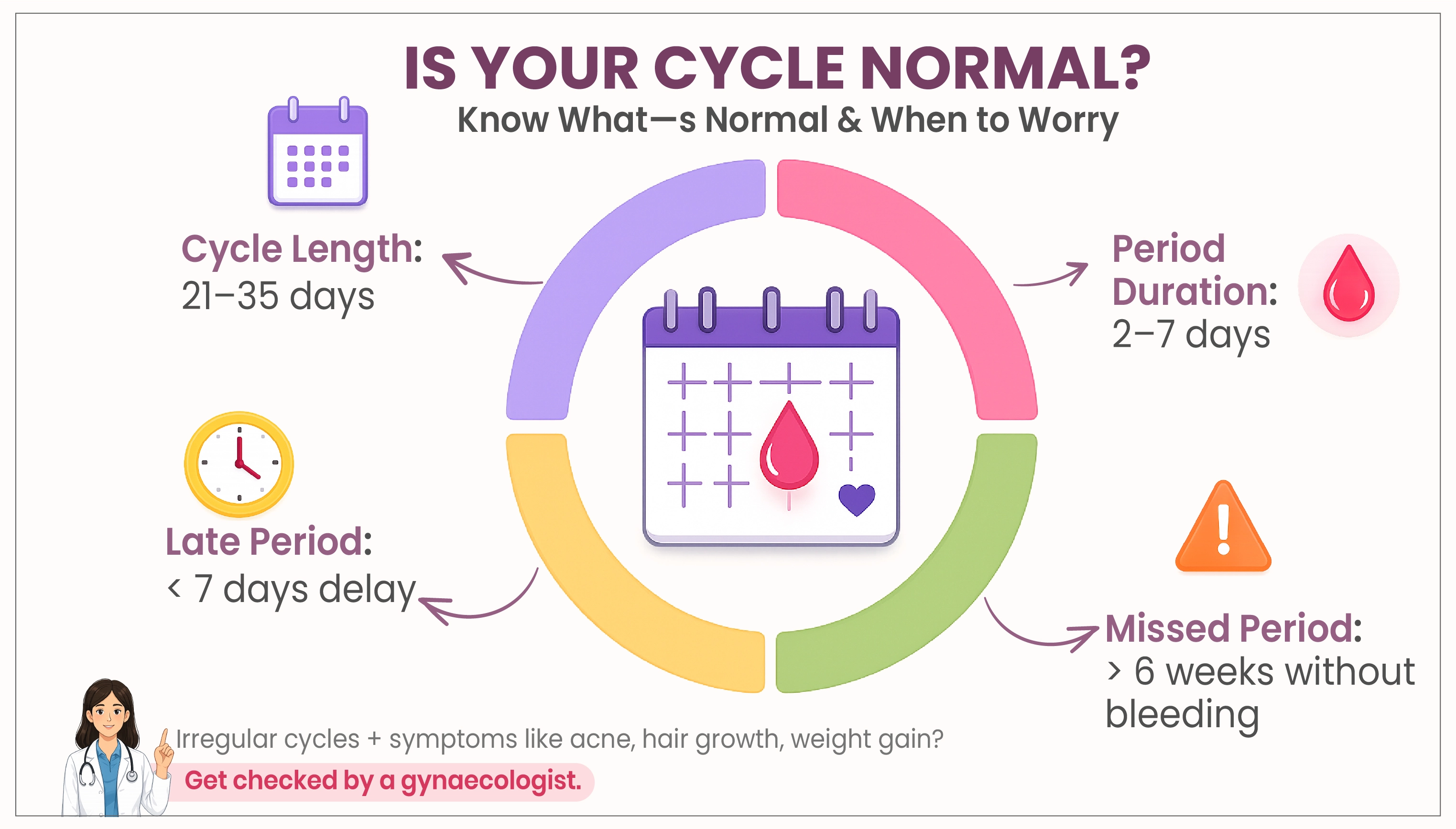
What Is a Healthy Normal Menstrual Cycle?
| Cycle Aspect | Normal Range | When to Worry |
| Full Cycle | 21-35 days | >6 weeks without bleeding |
| Period Length | 2-7 days | Late by 7+ days expected |
| Tracking Tip | Use apps daily | Irregular + symptoms (e.g., acne, hair growth) |
A typical menstrual cycle ranges from 21–35 days, with bleeding lasting 2–7 days.
- Late period: Not more than 7 days after your expected date.
- Missed period: No period for more than 6 weeks.
Occasional delay is normal, especially with stress, travel, illness, or big lifestyle changes. Teens often have irregular cycles for 1–2 years after menarche.
Use a period‑tracking app to understand your baseline. If your cycles are consistently irregular or you have symptoms like acne, excess hair, weight gain, or sudden changes, get a gynaecology check‑up.
People Also Ask
Is a 35 to 40 day cycle normal?
A 35 to 40‑day cycle can be normal if it is regular and you have no heavy, painful or very long periods
How do I know if my menstrual cycle is normal?
A normal menstrual cycle typically lasts 21–35 or 24–38 days, with predictable length, manageable flow, and mild or no pain.
Which Foods Induce Periods Faster? Here is the List
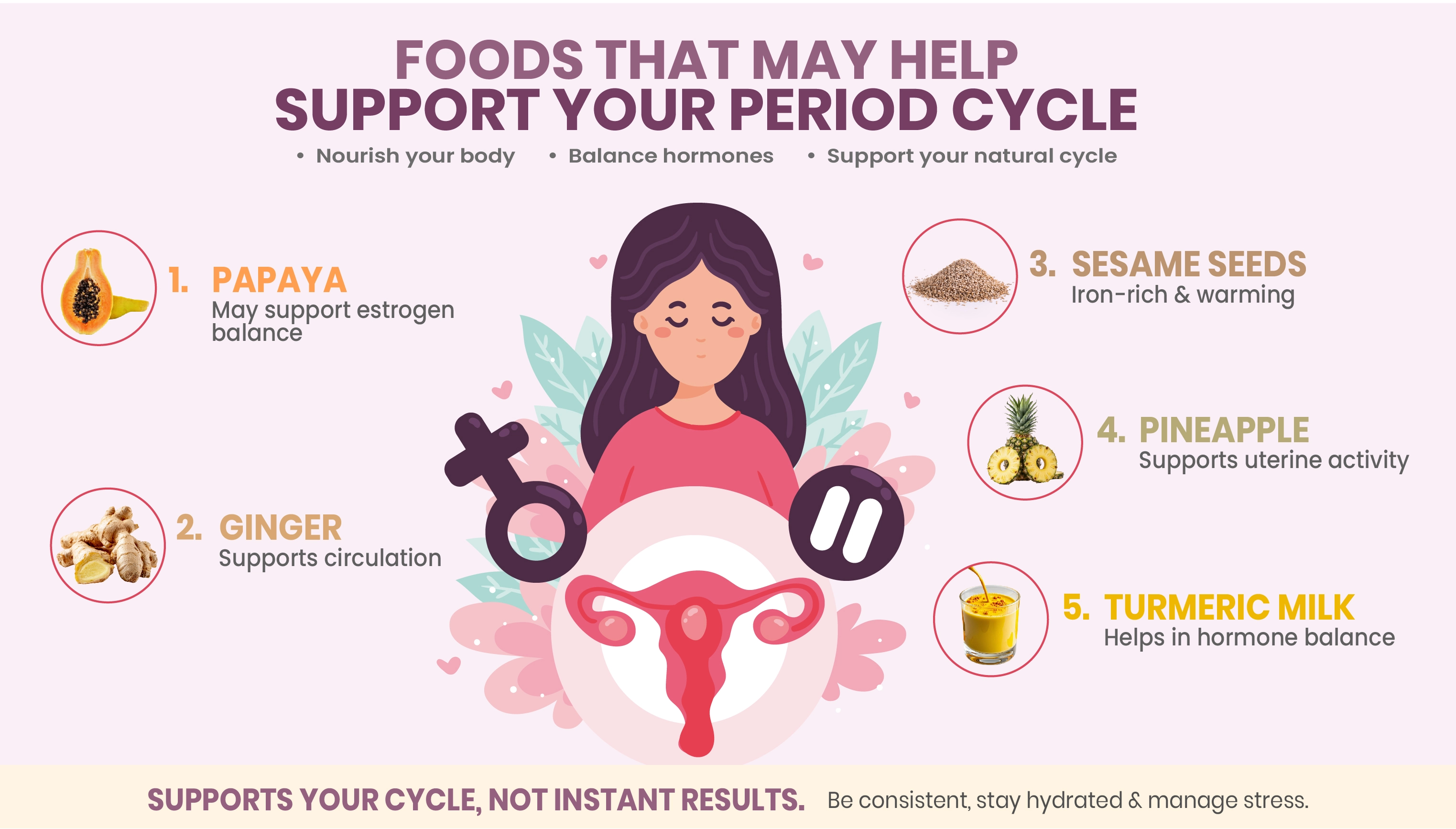
Certain foods may support a normal cycle and sometimes help bring on a period slightly earlier, but none can “induce” menstruation reliably or instantly.
The following food items could hasten the onset of your period:
| Food | Key Benefit | Daily Use |
| Papaya | May raise estrogen via carotene | 1 cup ripe/unripe or juice |
| Ginger | Eases cramps, emmenagogue | 1 tbsp juice + jaggery, twice a day |
| Sesame Seeds | Heat-generating, iron-rich | 1 tsp in hot water, twice a day |
| Pineapple | Bromelain for contractions | 1-2 fresh slices |
| Turmeric | Balances hormones | ½ tsp in warm water/milk |
1. Papaya (Most Recommended)
- Contains carotene → may support estrogen production
- Unripe papaya may stimulate uterine contractions
Eat: 1 cup daily (ripe or juice)
Note: Studies show that eating ripe papaya can modestly increase estradiol (a form of estrogen) and progesterone in women, likely via carotenoids and phytoestrogen‑like compounds. However, this effect is small, varies between individuals, and is not a reliable way to “raise estrogen” for medical or period‑induction purposes.
2. Ginger
- Improves circulation & reduces cramps
Take: Ginger juice + jaggery (2x daily)
3. Sesame Seeds
- Iron-rich + heat-producing
Take: 1 tsp with warm water
4. Pineapple
- Contains bromelain → supports uterine activity
5. Turmeric
- Helps regulate hormones
Best: Turmeric milk at night
Avoid excess caffeine, junk food, and cold drinks—they may slow down flow.
Quick Disclaimer: These are supportive remedies, not guarantees. Consult a gynaecologist if pregnant, over 45, or with symptoms like severe pain.
People Also Ask These Questions Related to Papaya:
1. How much time will take to get periods after eating papaya
Unripe papaya may slightly speed up bleeding in some women, usually within about 18–24 hours before the expected date, but results vary and are not guaranteed.
2. How to eat papaya to get periods immediately
There is no safe way to make periods come “immediately”; some eat raw papaya or juice 1–2 times daily 1–2 days before the expected date, but this is not reliable.
3. Raw papaya for periods?
Raw (unripe) papaya contains more papain and latex, which may mildly stimulate uterine contractions and help irregular cycles, but should not be used as a medical treatment.
4. Papaya seeds benefits for male
Papaya seeds may support male fertility and blood flow in small traditional doses, but high or long‑term intake can reduce sperm count and motility, so use cautiously.
5. How many papaya seeds should i eat per day
No established safe dose; some sources suggest tiny amounts (5–10 seeds) occasionally, but higher doses may harm sperm and hormones, so short‑term minimal use only.
6. Side effects of eating papaya during periods
Raw papaya may increase cramps or flow in sensitive women; ripe papaya eaten in excess can cause loose stools or acidity, so keep portions moderate.
7. How to eat papaya seeds
Dry, crush, and mix a very small amount in yoghurt, smoothies, or salads; do not eat raw or in large quantities due to sperm and liver‑related risks
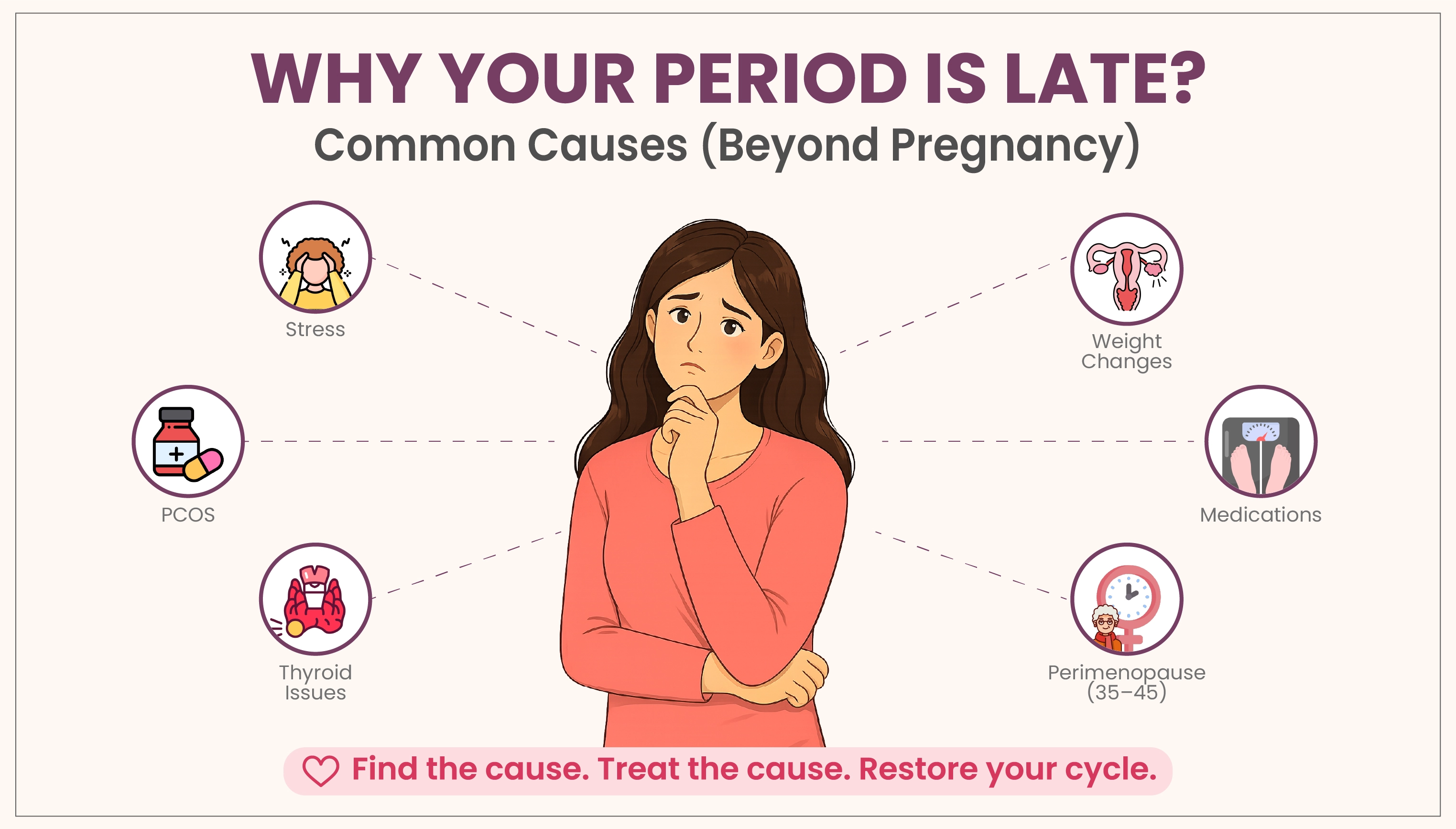
What Causes Late Periods That Aren't Pregnancy?
Before trying to “get periods fast,” identify the root cause:
| Cause | Key signs | When to see a doctor |
| Stress | Missed cycles, poor sleep, mood swings | If irregular for 2–3 cycles |
| PCOS | Irregular cycles, weight gain, acne, excess hair | Confirm with ultrasound and hormone tests |
| Thyroid issues | Heavy/very light/absent periods, fatigue, weight change | TSH test needed |
| Weight extremes | Sudden weight loss/gain, BMI <18, no ovulation | Check with a gynaecologist |
| Perimenopause (35–45) | Irregular cycles, hot flashes, mood swings | Hormone‑level evaluation |
| Medications (pills, antidepressants, BP drugs) | Cycle changes after starting/stopping | Discuss with prescribing doctor |
If you have 3+ missed periods, abnormal bleeding, or severe pain, consult a gynaecologist.
People Also Ask
Why are periods late when not pregnant?
Periods can delay from stress, weight changes, over‑exercise, thyroid issues, PCOS, illness, travel, or simple cycle variation; these are common non‑pregnancy causes.
Why periods come late for teenage girl?
In teens, periods often stay irregular for 2–3 years after first cycle because hormones and ovulation are still stabilizing; some missed or late cycles are normal early on.
Why periods come late for unmarried girl?
For unmarried girls, late periods usually stem from stress, weight gain or loss, PCOS, thyroid problems, or lifestyle factors; marital status itself does not delay cycles
What Exercises to Do to Get Periods Faster?: Best Yoga Poses & Exercises
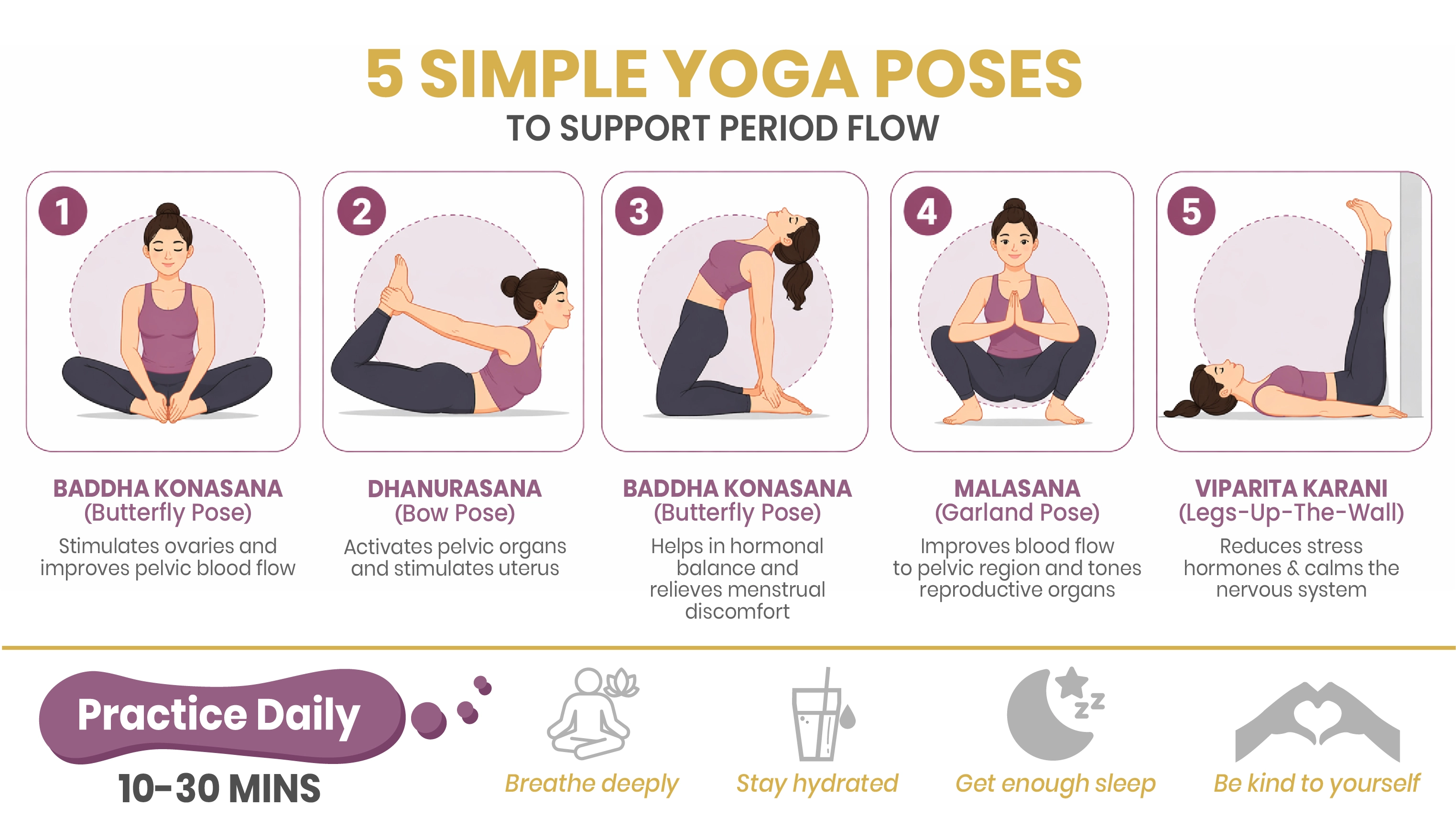
| Pose | Steps | Benefit/Duration |
| Baddha Konasana | Soles together, flap knees | Ovaries stim, 3-5 min |
| Dhanurasana | Prone lift w/ ankles | Pelvis compress, 20s x3 |
| Malasana | Deep squat prayer | Circulation, 1-2 min |
| Legs-Up-Wall | Hips to wall, relax | Cortisol drop, 5-10 min |
| Brisk Walk | Steady pace | Hormone balance, 30 min |
Exercise increases blood circulation to the pelvic region, reduces cortisol levels, and supports hormonal balance — all of which can help regulate and induce your period. Here are the most effective exercises recommended by our gynaecologists at Cocoon Hospital:
1. Baddha Konasana (Butterfly Pose)
Sit on the floor, bring the soles of your feet together close to your pelvis, and gently flap your knees up and down like butterfly wings. Hold for 3–5 minutes while breathing deeply.
Why it works: This pose directly stimulates the ovaries and uterus, improves blood flow to the pelvic region, and is one of the most recommended yoga poses for menstrual irregularity.
2. Dhanurasana (Bow Pose)
Lie on your stomach, bend your knees, reach back and hold your ankles, then lift your chest and thighs off the floor simultaneously. Hold for 20–30 seconds and release. Repeat 3 times.
Why it works: This pose compresses and releases the abdominal and pelvic organs, stimulating the reproductive system and uterus.
3. Ustrasana (Camel Pose)
Kneel on the floor with knees hip-width apart. Place your hands on your lower back for support and gently arch backwards, reaching for your heels. Hold for 20–30 seconds. Beginners can keep hands on lower back without reaching back.
Why it works: Stretches the abdomen deeply, stimulates digestive and reproductive organs, and helps balance oestrogen levels.
4. Malasana (Garland / Deep Squat Pose)
Stand with feet slightly wider than hip-width, toes turned out. Lower into a deep squat with palms pressed together at your chest (prayer position). Hold for 1–2 minutes. Use a folded blanket under your heels if needed for balance.
Why it works: Deep squats apply gentle pressure to the uterus and dramatically increase pelvic blood flow. One of the simplest and most effective poses for a delayed period.
5. Viparita Karani (Legs Up the Wall)
Lie on your back close to a wall. Raise both legs vertically and rest them against the wall, keeping your hips as close to the wall as possible. Arms relaxed at your sides. Stay for 5–10 minutes.
Why it works: This restorative pose reverses blood flow, reduces cortisol, calms the nervous system, and supports hormonal reset.
6. Brisk Walking (30 Minutes Daily)
A 30-minute brisk walk every day is one of the most underrated tools for menstrual regulation. It lowers cortisol, maintains a healthy body weight, and keeps reproductive hormones in balance. Unlike intense exercise, brisk walking supports rather than suppresses ovulation.
Important: Avoid very intense workouts like heavy weightlifting or long-distance running when trying to induce your period — these can further suppress ovulation and worsen the delay.
Top Medical Reasons Your Period Is Late (Beyond Stress)
| Cause | Key Signs | Red Flags |
| Polycystic Ovary Syndrome | Irregular cycles, weight gain | Acne, facial hair |
| Thyroid Issues | Heavy/light periods | Needs TSH test |
| Weight Changes | Sudden loss/gain | No ovulation |
| Stress | Missed cycles | Poor sleep |
| Perimenopause | Age 35–45 fluctuations | Early menopause signs |
A late or missed period is not always caused by stress alone. As gynaecologists at Cocoon Hospital, we most frequently see the following medical causes:
Read Also: Endometriosis-Causes, Symptoms and Treatments
PCOS (Polycystic Ovary Syndrome)
The most common hormonal disorder in Indian women aged 18–45. PCOS causes irregular or absent periods because the ovaries produce excess androgens, disrupting ovulation. If your periods are consistently irregular — not just occasionally late — PCOS is the first condition to rule out. Signs include irregular cycles, weight gain, acne along the jawline, and excess facial hair.
Thyroid Disorders
Both hypothyroidism (underactive thyroid) and hyperthyroidism (overactive thyroid) directly affect your menstrual cycle. Hypothyroidism is particularly common in Indian women and can cause periods to become very heavy, very light, or completely absent. A simple TSH blood test can confirm this.
Sudden Weight Loss or Gain
Your body needs a minimum level of body fat to produce oestrogen. Crash dieting, extreme weight loss, or sudden weight gain can halt ovulation and delay your period. Women with a BMI below 18 are especially at risk.
Excessive Exercise
Over-exercising suppresses the hypothalamus — the part of the brain that controls your reproductive hormones. Athletes and women who exercise intensely for more than 6 hours a week often experience irregular or missed periods, a condition known as exercise-induced amenorrhoea.
Perimenopause
Women in their late 30s and 40s may begin experiencing irregular cycles as hormones start fluctuating. This is a normal transition but should be confirmed by a doctor through hormone level testing.
Watch the video: Dr Mitul Gupta, Senior Consultant in Obstetrics & Gynecology, discusses menopause, symptoms of perimenopause, and tips to help manage menopause symptoms
Medications
Birth control pills, antidepressants, antipsychotics, and some blood pressure medications can all affect your cycle timing. If you recently started or stopped a medication and noticed cycle changes, speak with your prescribing doctor.
Note: If any of the above applies to you, natural home remedies will not fix the underlying cause. Please consult a gynaecologist for a proper diagnosis before relying on home remedies.
Read Also: Understanding Fertility Awareness Methods: Track Your Cycle Naturally
Papaya Benefits: Why It's #1 for Getting Periods Immediately
Papaya offers supportive benefits for menstrual health but is not scientifically proven as "#1" or a reliable method for inducing periods immediately.
Traditional use in Ayurveda and folk medicine promotes unripe papaya for periods due to latex enzymes, but human clinical trials are lacking. Animal studies show estrogen-like effects from extracts (leaves, peels, seeds), yet results don't reliably translate to immediate menstruation in women.
| Benefit | Mechanism | Proof Level |
| Mild Estrogenic Effects | Phytoestrogens in extracts (not primarily carotene) | Preliminary (animal studies) |
| Uterine Support | Papain may promote mild contractions | Anecdotal/low (animal/in vitro) |
| Nutrient Support | High in vitamins A, C, E, folate | Strong (nutritional data) |
| Cramp Relief | Anti-inflammatory compounds | Supportive (observational) |
Foods to Avoid When Your Period Is Late
Just as certain foods support menstruation, others can actively delay or suppress your cycle. Avoid these when trying to regulate your period:
- Excessive caffeine: More than 2 cups of coffee or tea per day raises cortisol and can suppress oestrogen production, disrupting cycle timing
- Processed and junk food: High-sodium foods cause bloating and water retention; refined sugar spikes insulin which raises androgen levels and worsens hormonal imbalance
- Ice-cold foods and drinks: Many gynaecologists advise avoiding extremely cold beverages during the pre-menstrual phase as they may constrict blood vessels and reduce pelvic blood flow
- Crash dieting or skipping meals: Severe calorie restriction signals famine to the body, causing it to shut down non-essential functions — including ovulation
- Alcohol: Disrupts hormonal balance by affecting how the liver processes oestrogen; worsens PMS symptoms and cycle irregularity
Lifestyle Tips to Regulate Periods Naturally
Small daily habits make a big difference:
- Meditation (10 mins/day via apps).
- Warm baths with Epsom salt.
- Drink adequate water to keep hydrated.
- 7-9 hours' sleep; fix irregular patterns.
- Stay hydrated (3L water)—dehydration worsens hormones.
How to use: 1 cup mid-cycle. Combine with turmeric milk for best results.
How to prepone periods by tablets
Doctors may prescribe progesterone‑based pills to trigger a withdrawal bleed; only a gynaecologist should decide dose and timing, never self‑medicate.
When to Contact Your Doctor for Delayed Peroids
| Symptom | Action | Reason |
| 3+ missed periods | Visit gynecologist | Check PCOS/thyroid |
| Post-sex bleeding | Immediate consult | Infection risk |
| Severe pain | Medical check | Underlying issue |
| Periods stopped <45 | Hormone tests | Early menopause |
Remember, natural tips only support your body in inducing your menstrual cycle on time but they are not the cure. If natural tips are not helping you to get your periods on time, then contact your doctor to know the underlying cause.
Contact the best gynaecologist near you if:
- You have missed three or more periods in a row.
- The pregnancy test is negative and there are still no periods.
- Periods stop unexpectedly before age 45.
- Sudden physical changes such as hair growth, acne, or weight changes
Conclusion
Don't worry if your periods are irregular. There are many harmless reasons why your menstrual cycle is irregular or late. However, if you go without a period for an extended time, you should consult with a doctor. Be mindful of other symptoms, such as changes in bleeding, abdominal pain, or unusual discharge.
Choose Cocoon Hospital for accurate advice on how to get periods fast from our expert gynecologists if you are suffering from irregular periods.
We are proud to be rated 4.7 stars on Google, based on 3,297 patient reviews, illustrating our commitment to exceptional gyenecological care.
Meet Our Experts:
- Dr. Himani Sharma: 25 years of experience
- Dr. Priya Gupta: Over 22 years of experience
- Dr. Mitul Gupta: 24 years of experience
- Dr. Asha Susawat: 11 years of experience
- Dr. Adarsh Bhargava: 50 years of experience
- Dr. Anupama Gangwal: Over 30 years of experience
- Dr. Fiyonika Porwal: 10 years of experience
- Dr. Nisha Mangal: Over 15 years of experience
FAQs
Q1: Is attempting to induce menstruation safe?
A: Trying natural techniques to induce periods is harmless. Before trying any home remedies, see a doctor if you think you may be pregnant, have hormonal imbalances, or have underlying medical conditions.
Q2: What is the duration of action for these remedies?
A: Natural methods may take a few days to show effects. However, results vary depending on an individual's hormonal balance and health.
Q3: Can periods be affected by sleeping patterns?
A: It is true that irregular sleep patterns might interfere with your hormone cycle and circadian rhythm. Keep your sleep schedule regular and take at least 7 to 9 hours of good sleep.
Q4: Is staying hydrated important?
A: Staying properly hydrated is important for general health and can help maintain regular menstrual periods. Hormonal imbalances and stress can be made worse by dehydration.
Q5: Does everyone benefit from papaya?
A: Because papaya contains carotene, which promotes oestrogen secretion, it can be very beneficial for certain people. Individual hormonal variations, however, might affect how effective it is. For best effects, combine it with other remedies like turmeric milk or ginger tea.
Q6. Are Sleep and periods—linked?
A: Yes. Hormonal shifts across your menstrual cycle can affect your quality sleep; in turn, poor or irregular sleep can worsen PMS, cramps, and flow and sometimes can even make cycles irregular or missed.
Q7. How to get periods overnight
A: You cannot safely make your period start overnight. Products claiming this “get periods overnight for sure” are a myth or marketing, not science.
Q8. What can I drink to start my period?
A: You should maintain a healthy diet with good hydration for timely periods. Some herbal teas, such as parsley tea, ginger tea or ginger with jaggery, and cinnamon tea, support blood flow or hormone balance but have limited scientific proof.
Q9. How to get periods in 2 hours?
A: You cannot safely make your period in 2 hours. Products claiming this “get periods in 2 hours for sure” are a myth or marketing, not science.
Q10. How late is too late for a period?
A: A period is considered late if it’s more than 7 days past your expected date; over 6 weeks without bleeding is usually a missed period needing medical evaluation.
Q11. How to get periods fast: 3 natural tips, exercises, and papaya benefits?
A: Eat papaya, drink ginger‑turmeric tea, and do light cardio or yoga daily; these may gently nudge your cycle by improving blood flow and mild hormonal effects.
Q12. How to get periods fast?
A: Gentle exercise, stress‑reducing techniques, and warming remedies like papaya or ginger tea may help when your cycle is just delayed, but they are not guaranteed.
Q13. How to get periods fast home remedies?
A: Soak papaya for 2–3 days, drink ginger or parsley tea, and take warm baths; these home choices may help by mildly stimulating uterine activity and circulation.
Q14. How to get periods fast at home?
A: Stay active with squats, jumps, and yoga, eat warming foods (papaya, ginger), and manage stress; homespun methods may nudge a delayed period but not force it.
Q15. How to get periods fast food?
A: Eat ripe (or slightly unripe) papaya, pineapple, dates, and warm, spicy foods; they may mildly boost estrogen‑like effects and uterine blood flow to advance your cycle.