 08929816349
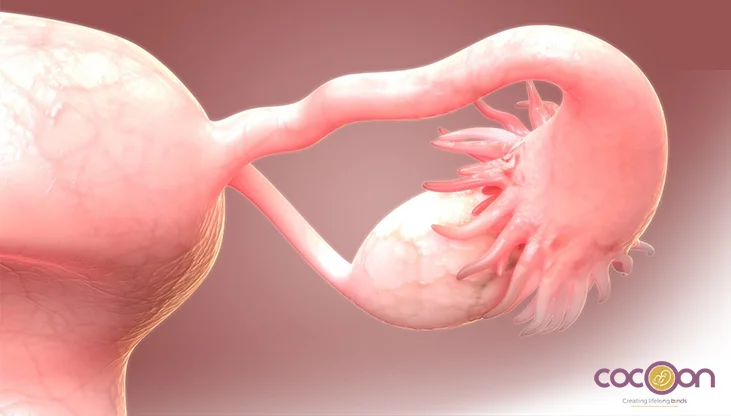
Ovaries are small, oval-shaped glands located on either side of your uterus (womb), which produce eggs and hormones for menstruation and pregnancy. The size of the ovaries changes naturally throughout a woman’s life cycle: 3-5 cm long, 1.5-3 cm wide, 0.6-1.5 cm thick (3-10 cc volume), shrinking post-menopause.
Slight right-left differences are common due to ovulation cycles. Understanding this “normal” ovarian size by age is important for both individuals and doctors to interpret ultrasound reports more confidently.
Read this article to learn the normal ovary size in women by age, how ovarian volume is measured, and when right–left differences are normal or may need medical attention.
Read Also: Ovarian Cysts: What Causes Them & How To Manage Symptoms
What Is a Normal Ovary Size?
In adult women, the ovaries are typically small but dynamic structures. According to radiological references, a normal ovary measures approximately the following:
- Length: 1.5 – 3 cm
- Width: 1.5 – 3 cm
- Thickness: 1 – 2 cm
However, in reproductive-age women, slightly larger measurements are often seen:
- Length: 3 – 5 cm
- Width: 1.5 – 3 cm
- Thickness: 0.6 – 1.5 cm
Normal Ovarian Volume
- Typical range: 3 – 10 mL (cc)
Ovarian volume is considered one of the most important indicators of ovarian health and reserve.
The ovaries are small, oval‑shaped glands located on either side of the uterus (womb) and are responsible for producing eggs and key hormones such as estrogen and progesterone.
On transvaginal ultrasound, they are typically reported in three dimensions (length, width, and depth) and often converted into volume using the ellipsoid formula:
Ellipsoid formula:
Ovarian volume=D 1×D 2×D3×0.52
Where D 1, D 2, and D 3 are the three axial diameters in millimeters or centimeters:
- D1 (Length): The longest longitudinal diameter (the longest measurement of the ovary from top to bottom).
- D2 (Width): The maximum transverse diameter (The measurement from one side to the other (sideways width)).
- D3 (Thickness/Depth): The maximum anteroposterior diameter (How thick the ovary is from front to back).
Read Also: Fibroid Treatment Hospital in Jaipur – Surgery & Cost
What is the Normal Size of the Ovaries in mm?
| Dimension | Normal range (mm) | Equivalent cm range |
| Length | 30–50 mm | 3–5 cm |
| Width | 15–30 mm | 1.5–3 cm |
| Thickness / Depth | 6–15 mm or 10–20 mm | ~0.6–2 cm |
| Approximate volume | 3–8 cc (often up to ~10 cc) | 3–8 mL |
Why Normal Ovary Size in cm or cc Matters
Ovary size is not just a number; it reflects the following:
- Egg reserve (fertility potential)
- Hormonal function
- Presence of cysts or conditions like PCOS
- Stage of reproductive life
A smaller-than-normal ovary may indicate reduced ovarian reserve, while larger ovaries could suggest cysts or polycystic ovary syndrome (PCOS).
Factors That Affect Ovary Size
Ovary size is not static; it changes frequently based on the following:
1. Age
The most important factor. Ovaries shrink after menopause.
2. Menstrual Cycle Phase
Ovaries may enlarge mid-cycle due to ovulation.
3. Hormonal Health
Estrogen and progesterone levels influence follicle development.
4. Pregnancy
Ovaries can temporarily increase in size during pregnancy.
5. Medical Conditions
Conditions like PCOS, ovarian cysts, or tumors can affect size
Normal Ovarian Volume by Age Group
Here is the approximate range:
| Age group (years) | Approximate mean ovarian volume (cc or mL) | Typical “normal” range (cc) |
| <20 | ~5–6 cc | About 3–9 cc |
| 20–29 | ~7–8 cc | About 4–12 cc |
| 30–39 | ~6–6.5 cc | About 4–11 cc |
| 40–49 | ~4–5 cc | About 3–8 cc |
| 50–59 (peri‑/post‑menopausal) | ~2.5–3 cc | About 1.5–5 cc |
| ≥60 | ~1.5–2 cc | About 1–4 cc |
Note:
- In women of childbearing age, an ovarian size up to 15–20 cc can still be normal, but anything above 20 cc may need a check.
- After menopause, an ovarian size above 10 cc is usually not normal and should be examined further.
- Doctors always look at size along with symptoms, age, and scan details before deciding if there’s a problem.
Key Differences Between Right vs. Left Ovary?
Many women ask whether the right ovary is larger than the left or if ovulation happens more often from one side.
Studies show that:
- It’s normal for one ovary to be bigger than the other, even up to twice the size, especially in younger women.
- The right ovary may release eggs a bit more often, but both sides work over time.
- This size difference usually happens due to normal monthly changes and blood flow.
In short, a slightly bigger ovary on ultrasound is usually normal, not a problem.
The Left & Right Ovary Normal Size in cm | The Comparison
Here is the difference:
| Parameter | Right ovary normal size (cm) | Left ovary normal size (cm) | Comment |
| Length | 3–5 cm | 3–5 cm | Both ovaries commonly fall in this range; slight asymmetry is normal. |
| Width (breadth) | 1.5–3 cm | 1.5–3 cm | One ovary may be mildly larger than the other without pathology. |
| Thickness (height/depth) | 0.6–1.5 cm | 0.6–1.5 cm | Typical thickness in non‑pregnant adults. |
| Volume (approx.) | 3–6 cc (often up to about 10 cc) g | 3–6 cc (often up to about 10 cc) | Volume is usually similar on both sides; large differences may need evaluation. |
Why is One Ovary Bigger than Another?
Because of the following reasons:
1. Ovulation Cycle
Each month, one ovary releases an egg. The ovary doing the ovulation may temporarily enlarge due to the dominant follicle.
2. Functional Cysts
Small, harmless cysts can form during the menstrual cycle, slightly increasing ovary size.
3. Hormonal Variations
Hormones influence follicle growth, which can affect ovary size.
4. Natural Anatomical Variation
Just like other organs, slight asymmetry is normal.
When Should You Be Concerned?
While variation is normal, certain findings may require medical evaluation:
Red Flags:
- Ovarian volume greater than 10 mL
- Persistent enlargement of one ovary
- Severe pelvic pain
- Irregular menstrual cycles
- Signs of PCOS or endometriosis
Large ovarian volume may indicate:
- PCOS (Polycystic Ovary Syndrome)
- Ovarian cysts
- Tumors (rare but important to rule out)
How Is Ovary Size Measured?
Doctors use imaging techniques such as:
- Ultrasound (most common)
- MRI or CT scans (less common)
Ovarian Volume Formula:
Volume is calculated using 0.523 × Length × Width × Depth
This helps provide a more accurate assessment than linear measurements alone.
Ovary Size and Fertility: The Link
Ovary size is closely linked to fertility:
- Normal size (6–10 mL): Good ovarian reserve
- Small ovaries (<3 mL): Low egg reserve
- Large ovaries (>10 mL): Possible PCOS
Note: Ovary size alone cannot determine fertility; other tests like AMH levels and follicle count are also important.
Common Myths About Ovary Size
Myth 1: Both ovaries must be identical
Reality: Small differences are normal.
Myth 2: Bigger ovaries mean better fertility
Reality: Very large ovaries may indicate PCOS.
Myth 3: Ovary size never changes
Reality: It changes throughout life and even within a menstrual cycle.
Conclusion
Ovary size is an important marker of reproductive health, but it must always be interpreted in the right context. A slight difference between the right and left ovary is completely normal and often reflects natural biological processes like ovulation.
If you have concerns about your ovarian size or ultrasound results, consult a healthcare professional for proper diagnosis and guidance.
Your Quick Takeaways
- Normal ovary size varies by age, hormones, and menstrual cycle
- Typical ovarian volume ranges from 3 to 10 mL
- Ovaries are the largest during reproductive years
- Right and left ovaries may differ slightly, which is normal
- Significant enlargement or symptoms should be evaluated by a doctor
Want to keep your ovaries healthy and support better fertility?
Book your free consultation today; contact us today at contactjpr@cocoon.co.in; 08929816349
Cocoon Hospital is proud to be rated 4.7 stars on Google, based on 3,297 patient reviews, illustrating our commitment to exceptional women's care in Jaipur.
Meet Our Experts:
- Dr. Himani Sharma: 25 years of experience
- Dr. Priya Gupta: Over 22 years of experience
- Dr. Mitul Gupta: 24 years of experience
- Dr. Asha Susawat: 11 years of experience
- Dr. Adarsh Bhargava: 50 years of experience
- Dr. Anupama Gangwal: Over 30 years of experience
- Dr. Fiyonika Porwal: 10 years of experience
- Dr. Nisha Mangal: Over 15 years of experience
FAQs
Q1: What is a normal ovary size?
A: A normal adult ovary is roughly 3–5 cm long, 1.5–3 cm wide, and 0.6–1.5 cm thick, varying slightly with age and menstrual cycle phase.
Q2: What is the right ovary's normal size in mm?
A: The right ovary’s normal size is about 30–50 mm in length, 15–30 mm in width, and 6–15 mm in thickness, similar to the left ovary.
Q3: What is left ovary's normal size in cm?
A: The left ovary’s normal size is around 3–5 cm long, 1.5–3 cm wide, and 0.6–1.5 cm thick in reproductive‑age women, with minor individual differences.
Q4: What is the normal size of the ovaries in mm?
A: Normal ovaries typically measure 30–50 mm in length, 15–30 mm in width, and 6–15 mm in thickness, applying to both right and left ovaries together.