
Newborn Care & Monitoring
Home > Specialities > Neonatology and Pediatrics > Newborn Care & Monitoring
At Cocoon Hospitals, our newborn care and monitoring services backed by modern technology ensure your baby receives the highest level of specialized attention from day one. Our multidisciplinary team provides round-the-clock, personalized care to both mother and baby based on their specific health needs.
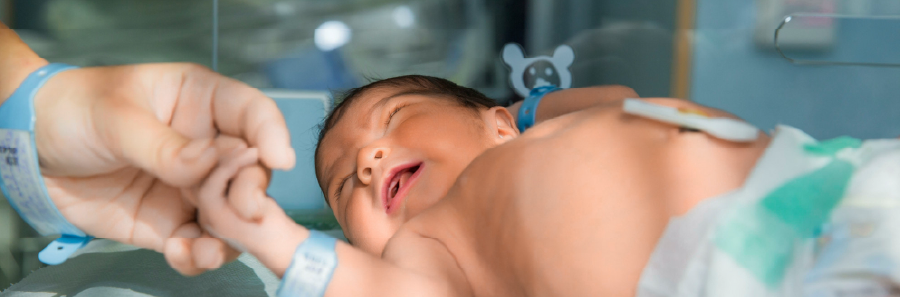
Understanding the Newborn Care & Monitoring
Newborn care and monitoring is specialized care given to a child immediately after birth. Newborn care in the hospital helps your baby transition to life outside your uterus (womb). This process includes tracking physical and neurological development, evaluating feeding and nutrition, and detecting early signs of potential health issues.
Right after delivery, our newborn infant care team will conduct a few steps to welcome your newborn into the world. These steps are:
- Dry off your baby.
- Clear their airway of mucus with a suction bulb, cloth, or small tube.
- Wrap them in a blanket to keep warm.
Our pediatrician will then quickly check your baby’s health status and determine if they meet the health conditions, such as appropriate muscle tone, no trouble breathing, reaching a certain length of pregnancy, and an acceptable Apgar score. If yes, then your child likely won’t require any urgent medical attention, but monitoring will still continue.
Benefits of Newborn Care & Monitoring
Newborn care and monitoring reduce complications through the following benefits./p>
- Detection of health complications early.
- Continuous tracking of vital signs, such as heart rate, breathing, oxygen levels, temperature, and blood pressure.
- Personalized care plans based on specific health needs through real‑time monitoring data.
- Support for healthy growth and overall development.
- The Apgar score measures your baby's: A — Appearance (color); P — Pulse (heart rate); G — Grimace (reflex response); A — Activity (muscle tone); R — Respiration (breathing). These scores give insight to our doctors about how much immediate attention newborns may need right after delivery.
Newborn Care & Monitoring Services at Cocoon Hospital
We combine decades of clinical expertise with modern diagnostic facilities to ensure your child, right after birth, receives complete care under one roof.
| Service Category | What Is Done | Why It Matters |
|---|---|---|
| Birth stabilization | Drying, airway clearing, warm wrapping, and first check within minutes. | Ensures stable transition to breathing and prevents hypothermia. |
| Apgar scoring (1 & 5 min) | Scores Appearance, Pulse, Grimace, Activity, and Respiration. | Detects the need for resuscitation or urgent NICU care. |
| Skin-to-skin / kangaroo care | Places the baby on the parent’s chest after birth. | Improves bonding, heart rate, temperature regulation, and breastfeeding. |
| Preventive treatments | Eye drops/ointment, vitamin K, hepatitis B vaccine, and RSV-preventive antibody. | Prevents eye infection, bleeding disorders, hepatitis B, and severe RSV infection. |
| Feeding support | Monitors breastfeeding/bottle feeding and helps with latch and feeding frequency. | Ensures adequate intake and prevents dehydration. |
| Newborn screening | Heel-prick blood test for metabolic and genetic disorders. | Detects treatable diseases early, such as thyroid disorders, PKU, and sickle cell disease. |
| Hearing & heart screening | Hearing tests, pulse oximetry for heart defects, and stool/circumcision checks. | Detects hearing loss and critical heart problems early. |
| Jaundice & glucose checks | Bilirubin and blood sugar tests for babies who are small, large, or jittery. | Prevents brain injury from severe jaundice or low blood sugar. |
| Daily monitoring (normal) | Weighing, diaper counts, and monitoring feeding, sleep, and activity. | Confirms healthy growth and readiness for discharge. |
| NICU monitoring | Continuous monitoring of heart rate, breathing, oxygen, blood pressure, and temperature. | Helps detect apnea, low oxygen, sepsis, or instability early. |
| Respiratory support | Pulse oximetry, CPAP, ventilators, or high-frequency ventilation as needed. | Supports breathing and protects immature lungs. |
| Neurological monitoring | Observation for seizures or poor muscle tone with EEG or neuromonitoring when required. | Helps detect brain injury and guide treatment. |
| Infection monitoring | Monitoring for fever, lethargy, and poor feeding, with blood tests if needed. | Enables early antibiotic treatment and prevents sepsis complications. |
| Temperature & comfort care | Incubators, warmers, temperature probes, and kangaroo care when possible. | Maintains body temperature and reduces stress. |
| Parent teaching & discharge | Guidance on feeding, bathing, cord care, and recognizing danger signs. | Builds parental confidence and reduces avoidable readmissions. |
| Follow-up (NICU graduates) | Regular check-ups for growth, feeding, vision, hearing, and development. | Tracks long-term progress and supports early therapy if delays appear. |
Why Choose Cocoon Hospital for Newborn Care & Monitoring ?
Located in the heart of Chandigarh, Cocoon Hospital's newborn care and monitoring department combines cutting-edge technology with compassionate care tailored for every newborn. We prioritize a calm, private, and premium environment for parents to empower them with the right support.
Here is why we stand out:
- Experienced gynaecologists with over 20 years of experience.
- Over 20,000 successful deliveries.
- Advanced ventilation systems (HFOV, INO, and non-invasive support).
- Availability of a 24/7 expert neonatology team care.
- Integrated care and supportive environment.
- Comprehensive mother-child healthcare services.
Give your newborn a strong and healthy start through continuous monitoring
Speak to our experts for the right diagnosis and treatment at 09513174543.
How long do you stay at the hospital after birth?
Generally, healthy newborns can leave the hospital after two or three days, based on how they were delivered.
When is Newborn feeding done?
Newborns are required to be fed early and often to prevent dehydration.
How long to wait for a newborn's first bath?
The World Health Organization recommends waiting for 24 hours before giving your baby their first bath. Some healthcare professionals recommend waiting a week to bathe the newborn because the umbilical cord stump generally falls off within a week or two.
What are the benefits of delaying your baby’s first bath?
Here are the top three advantages:
- Helps control the baby’s body temperature
- Prevents dry skin
- Contribute to more successful breastfeeding