
Newborn Screening
Home > Specialities > Neonatology and Pediatrics > Newborn Screening
At Cocoon Hospitals, our comprehensive Newborn Screening program ensures that congenital disorders are detected within 24-48 hours of your baby’s birth. Our medical team conducts a complete panel of essential tests to identify potential genetic, metabolic, hormonal, and congenital disorders. This proactive approach allows for timely treatment, giving your baby the best possible start in life.
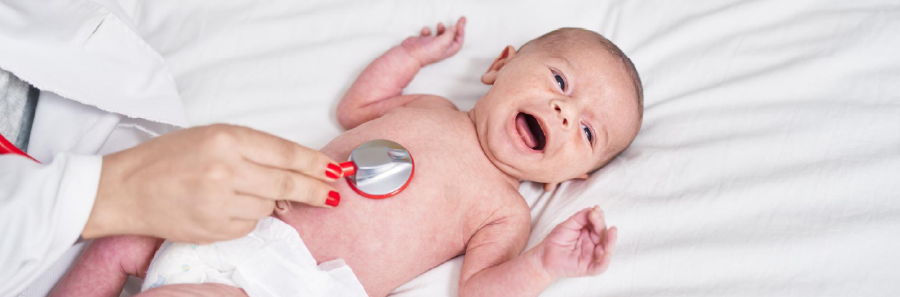
Understanding Newborn Screening
Newborn screening is an important public health program that tests infants shortly after birth for rare, serious genetic, metabolic, hormone, and blood disorders. The disorders targeted by newborn screening are usually those that, without intervention, would cause significant morbidity, mortality, or intellectual disability.
With early detection, these conditions can be prevented or treated. Your baby's heel will be pricked, and a sample of blood will be taken to test for many different conditions.
Benefits of Newborn Screening
Performed within 24–72 hours of birth, it offers the following benefits:
- Detect serious genetic, metabolic, and hormonal disorders.
- Early diagnosis saves lives.
- Prevents long-term disabilities.
- Enables effective treatment.
- Peace of mind for parents.
Newborn Screening Test Panel at Cocoon Hospital
Cocoon Hospital's newborn screening program covers a comprehensive panel tailored to Indian newborns. We use dried blood spots for non-invasive collection, minimizing discomfort.
| Test | Purpose |
|---|---|
| Phenylketonuria (PKU) | Inborn error of amino acid metabolism causing high phenylalanine levels. |
| Congenital hypothyroidism (TSH) | Detects an underactive thyroid gland that can affect growth and brain development. |
| Galactosemia | Identifies inability to metabolize galactose, which may cause liver and brain damage. |
| Biotinidase deficiency | Detects deficiency of the biotin recycling enzyme; treatable with supplementation. |
| G6PD deficiency | Identifies glucose-6-phosphate dehydrogenase deficiency, which can lead to hemolytic anemia. |
| 17-OH Progesterone (17-OHP) | Screens for congenital adrenal hyperplasia (CAH). |
| Maple syrup urine disease (MSUD) | Detects a metabolic disorder affecting branched-chain amino acid breakdown and brain function. |
| Cystic fibrosis (CF) screening | Screens for a genetic disorder affecting the lungs and pancreas. |
| Sickle cell disease / hemoglobinopathies | Detects abnormal hemoglobin disorders causing anemia and pain crises. |
| Organic acidemias (expanded panel) | Identifies metabolic disorders that may cause vomiting, lethargy, and coma. |
| Fatty acid oxidation disorders | Detects problems with energy production from fats, especially during fasting. |
| Amino acid disorders (tandem mass spectrometry panel) | Screens for a group of rare metabolic diseases using TMS/GCMS methods. |
The Newborn Screening Process at Cocoon Hospital: Step-by-Step
Experience hassle-free newborn screening at Cocoon Hospital with our efficient 5-step process:
- Collection (24-48 hours post-birth)
A small heel prick collects 4-5 blood spots on filter paper. No pain for the baby, done while sleeping. - Lab Analysis
Samples reach our lab within hours; MS/MS technology scans 50+ disorders. - Results Delivery
SMS/email within 3-7 days; positives trigger immediate pediatrician callback - Confirmation & Counseling
If abnormal, confirmatory tests (e.g., TSH levels for hypothyroidism) follow, with genetic counseling. - Follow-Up Care
Dedicated neonatologists manage treatment plans, including NICU support if needed.
List of Conditions Detected Through Newborn Screening
Here are the common conditions detected by newborn screening:
- Congenital hypothyroidism
- Phenylketonuria (PKU)
- Maple syrup urine disease
- Galactosemia
- Biotinidase deficiency
- Fatty acid oxidation disorders (e.g., MCAD)
- Organic acidurias
- Urea‑cycle defects
- Sickle cell disease and other hemoglobinopathies
- Cystic fibrosis
- Spinal muscular atrophy (SMA)
- Congenital adrenal hyperplasia (CAH)
- Severe combined immunodeficiency (SCID; in some programs)
- Hearing loss (screened by hearing test)
- Critical congenital heart disease (screened by pulse oximetry)
Why Choose Cocoon Hospital for Newborn Screening ?
Cocoon Hospital is the leading choice for newborn screening. We combine early-detection testing with a full‑fledged neonatal care setup, ensuring that any issues detected can be managed promptly and expertly.
Here is why we stand out:
- Experienced gynaecologists with over 20 years of experience.
- Over 20,000 successful deliveries.
- Advanced ventilation systems (HFOV, INO, and non-invasive support).
- Availability of 24/7 expert neonatology team care.
- Integrated care and supportive environment.
- Comprehensive mother-child healthcare services.
Give your newborn a healthy start with timely newborn screening & continuous monitoring.
Speak to our experts for the right diagnosis and treatment at 09513174543.
Is Newborn Screening safe?
Newborn screening is very safe; it uses a tiny heel‑prick blood sample, a hearing test, and a heart check, with minimal risk and no long‑term harm to the baby.
What happens if a Newborn Screening Test is positive?
A positive result means higher risk for a condition; doctors order urgent confirmatory tests and start treatment only if the diagnosis is confirmed.
Which conditions are detected through newborn screening?
Newborn screening finds serious treatable disorders such as hearing loss, congenital hypothyroidism, sickle cell disease, cystic fibrosis, metabolic errors, endocrine problems, and some heart defects.