
Stem Cell Preservation
Home > Specialities > Obstetrics > Stem Cell Preservation
Stem Cell Preservation at Cocoon Hospitals is more than just a medical procedure; it is a proactive health investment for your child’s future well-being, helping safeguard against 90+ potential diseases. We offer state-of-the-art umbilical cord blood banking and stem cell storage services to ensure long-term safety, quality, and preservation of your baby’s unique stem cells.
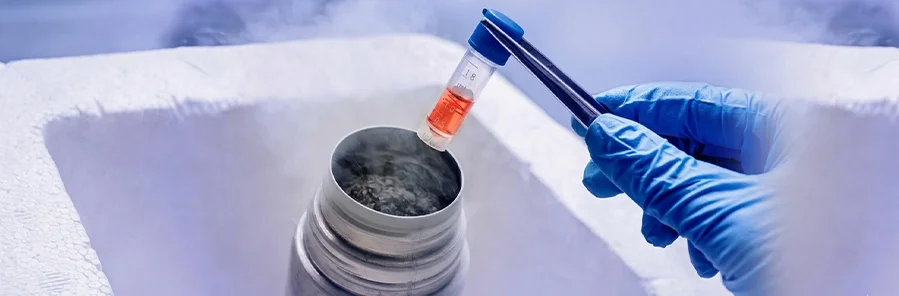
Understanding Stem Cell Preservation (Or Banking)
It is the process of collecting, processing, and freezing stem cells, generally from umbilical cord blood or tissue at birth. After collection, these stem cells are stored for the selected years using cryogenic technology (freezing at −190 degrees Celsius) for potential future medical treatments.
Stem Cells Type in Cord Blood
| Stem Cell Type | Description | Its Potential Benefits |
|---|---|---|
| Hematopoietic Stem Cells (HSCs) | Responsible for forming all types of blood cells, including red blood cells, white blood cells, and platelets. | Used in the treatment of over 90 diseases, including leukemia, lymphoma, and various blood disorders. |
Stem Cells Type in Cord Tissue (Umbilical Cord)
| Stem Cell Type | Description | Its Potential Benefits |
|---|---|---|
| Mesenchymal Stem Cells (MSCs) | These are multipotent stem cells found in Wharton’s jelly and the surrounding tissue of the umbilical cord. They can differentiate into bone, cartilage, fat, and other connective tissue cells. | Investigated for regenerative therapies in orthopedic, autoimmune, and inflammatory conditions. They also show potential use in tissue engineering, wound healing, and regenerative medicine applications. |
The key difference is that cord blood (HSCs) focuses on blood and immune system repair, and cord tissue (MSCs) focuses on structural and tissue regeneration. That's why many parents choose to store both types of stem cells for maximum future health coverage.
Benefits of Stem Cell Preservation
These cells have the potential to safeguard against 90+ diseases and 700+ medical conditions (note: many are in the early clinical trial phase), such as cancers, blood disorders, immune deficiencies, and genetic conditions.
- Immediate Availability: Stem cells collected from your newborn's umbilical cord are a 100% match for the child. This reduces the risk of graft-versus-host disease in transplants.
- Support Treatment of Serious Conditions: It currently supports the treatment of various cancers, blood disorders, and immune system deficiencies.
- Potential Future Therapy: Ongoing research explores their potential use in repairing tissues and supporting the treatment of chronic conditions such as cerebral palsy, Type 1 diabetes, and autism.
- Non-Invasive & Painless Collection: The collection process is painless, safe, and happens just after delivery. It provides instant access to stored cells without searching for a donor should a serious medical need arise in the future.
- Long-term Storage Option: Stem cells can be stored for decades in a cryogenic facility. Studies show that they remain viable for over 25 years without degradation in quality.
Stem Cell Preservation (Banking) Process | Step-by-Step at Cocoon Hospital
At Cocoon Hospital, cord blood and cord tissue banking are seamless from consultation to storage. We make every step smooth so that you focus on your bundle of joy.
Step 1. Pre-Delivery Consultation
Our experts will discuss your baby’s stem cell banking plans, including genetic counseling.
Step 2. Collection at Birth
Just after delivery, our trained team collects 40-150 ml of cord blood and tissue in under 10 minutes.
Step 3. Sample Sent to Lab for Processing
Samples are sent to our AABB-accredited lab where the stem cells are carefully isolated, tested for infections, and prepared for long-term storage (cryopreservation at -196°C).
Step 4. Secure Storage
Private vaults are assigned, monitored 24/7 and supported by backup power to ensure the cells are viable for possible future needs.
Step 5. Immediate Access
The stem cells can be retrieved anytime for transplant.
Who Should Consider Stem Cell Preservation ?
Here’s who should consider it:
- Individuals wanting a biological “backup” for future treatments.
- Expecting parents having a family history of genetic or blood disorders.
- Those interested in regenerative medicine options.
- Parents wanting access to emerging therapies.
Why Choose Cocoon Hospital for Stem Cell Preservation ?
Chandigarhs top maternity hospital, Cocoon, is the leading stem cell preservation center. We are equipped with advanced technology backed by expert care, and we safeguard your baby’s stem cells for future health needs. This makes us more than a hospital, i.e., your family’s trusted health guardian for a secure tomorrow.
Here is what makes us stand out:
- AABB and ISO 9001 Accreditation
- Dual Banking (Blood and Tissue)
- Expert Team
- Automated Processing Reduces Cell Loss by 30%
- Secure Storage
- Seamless Coordination During Delivery
Secure Your Baby's Tomorrow Today
Book your free consultation today. Contact us at contactchd@cocoon.co.in or call 09513174543.
Cocoon Hospital is associated with Cryoviva Life Sciences, a healthcare venture of RJ Corp focused on medical innovation and quality care. Specializing in cord blood banking, personalized genomics, and mother-and-child healthcare solutions, Cryoviva has expanded its presence across Singapore, Thailand, and Vietnam, driving advancements in healthcare excellence.
To Know More, visit: cryovivalifesciences.in
Is Stem Cell Preservation worth it?
Preserving Stem Cells from cord blood and tissue can be worth it for some families, particularly if there is a family history of blood cancers or genetic disorders, or if you want a biologically matched resource to secure your baby’s future health against potential health conditions.
Should I keep my baby's Stem Cells?
Yes, it is your personal decision that acts as a form of "biological insurance". Preservation of your baby's stem cells offers immediate access to cells for potential future treatments of over 90 diseases (e.g., blood cancers, immune disorders).
Is Stem Cell Preservation safe?
Yes, it is generally considered a safe, non-invasive, and painless process for both mother and baby.