
Laparoscopy
Home > Specialities > Gynaec Surgeries > Laparoscopy
At Cocoon Hospitals, our Gynaecological department is fully equipped to offer Laparoscopy, which is an advanced Minimally Invasive surgical technique.
Our experienced Gynaecologists prefer the Laparoscopic “keyhole” approach tailored to your condition to look inside your stomach or pelvis. This ensures minimal discomfort, quicker healing, optimal outcomes, and better fertility outcomes compared with Open Surgery.
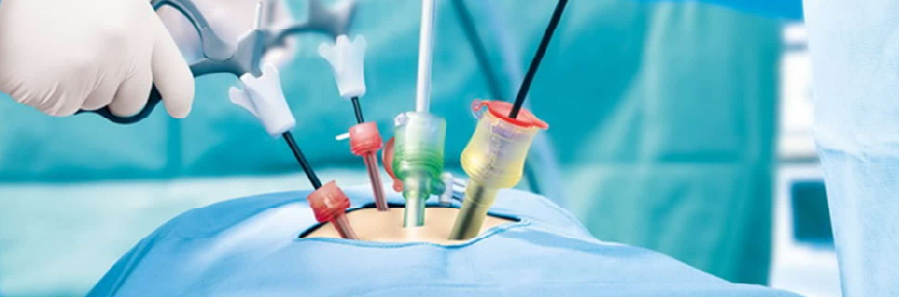
Understanding Laparoscopy
A Laparoscopy is a Surgical technique that lets a surgeon look inside your body without making a large incision (cut). Our experts recommend it to help diagnose and sometimes treat conditions that develop in your belly or pelvis.
Laparoscopy is sometimes called "minimally invasive surgery" or "keyhole surgery" because it involves making smaller cuts than traditional, "open" surgery.
Benefits of Laparoscopy
Here are the key benefits:
- Minimally invasive (meaning small incision, usually 0.5 to 1.5 cm)
- Shorter hospital stays
- Less pain during healing
- Faster recovery and smaller scars
- Less risk of infection
- Less blood loss and a lower risk of hemorrhage
Types of Laparoscopy Procedures at Cocoon Hospital
Our surgeons are experienced in performing both methods to diagnose and treat a wide range of medical conditions.
| Methods | Details |
|---|---|
| Diagnostic Laparoscopy | Performed to examine the abdominal or pelvic organs when imaging tests are inconclusive. It helps identify causes of pelvic or abdominal pain, infections, cysts, tumors, adhesions, or internal bleeding. |
| Operative Laparoscopy | Used to treat conditions such as ovarian cysts, endometriosis, fibroids, or hernias, and to perform procedures including biopsies or organ removal using minimally invasive surgical techniques. |
Here are the subtypes of laparoscopy procedures recommended in various conditions.
| Subtype | Details |
|---|---|
| Laparoscopic Hysterectomy | A minimally invasive procedure to remove the uterus for conditions such as fibroids, heavy menstrual bleeding, adenomyosis, or gynecologic cancers. It may be performed as a total hysterectomy (removal of the uterus and cervix) or partial hysterectomy (cervix preserved). Compared with open surgery, it generally offers less pain, smaller scars, and faster recovery. |
| Laparoscopic Ovarian Cystectomy | A minimally invasive surgery to remove ovarian cysts while preserving healthy ovarian tissue and function. It is commonly recommended for persistent cysts, pelvic pain, irregular periods, PCOS-related complications, or fertility concerns. |
| Laparoscopic Myomectomy | A fertility-preserving procedure used to remove uterine fibroids while keeping the uterus intact. Fibroids are separated from the uterine wall and removed through small “keyhole” incisions. |
| Laparoscopic Endometriosis Surgery | Used to remove or destroy endometrial tissue growing outside the uterus, helping relieve pelvic pain, inflammation, adhesions, and infertility associated with endometriosis while preserving reproductive organs whenever possible. |
| Laparoscopic Tubal Ligation | A permanent contraception procedure in which the fallopian tubes are sealed, clipped, or cut to prevent pregnancy. It is considered a highly effective minimally invasive sterilization method. |
| Laparoscopic Ectopic Pregnancy Surgery | A minimally invasive procedure to remove an ectopic pregnancy, most commonly from the fallopian tube. The approach aims to treat the condition promptly while preserving fertility and minimizing damage to surrounding tissues whenever feasible. |
When is Laparoscopy needed ?
Our experts can consider minimally invasive laparoscopy to diagnose or treat the following conditions:
- Cyst, fibroid, stone and polyp removals.
- Ectopic pregnancy removal.
- Small tumor removals.
- Biopsies.
- Tubal ligation and reversal.
- Endometriosis surgery.
- Rectopexy (rectal prolapse repair).
- Urethral and vaginal reconstruction surgery.
- Orchiopexy (testicle correction surgery).
- You have pain or other symptoms in your belly or pelvis, and imaging tests haven't been able to find the cause.
Laparoscopy Procedures at Cocoon Hospital: Step-by-Step Approach
Here is what you can expect:
Pre-surgical evaluation
Detailed medical history, physical examination, and diagnostic tests.
Preparation
Fasting before surgery and pre-anesthesia evaluation.
Surgical procedure
- Performed under general anesthesia
- Small incision near the belly button
- Carbon dioxide gas is used to expand the abdomen for better visibility
- A laparoscope (tiny camera) and instruments are inserted through small cuts
- Procedure performed with real-time imaging guidance
Post-operative care
Monitoring in the recovery room, pain management, and discharge planning.
Follow-up care
Regular check-ups to ensure proper healing and recovery.
At Cocoon, experts prioritize minimally invasive keyhole techniques, as most patients can return to normal activities sooner with this.
Why Choose Cocoon Hospital for Laparoscopy (Keyhole Surgery) ?
Located at the heart of Chandigarh, Cocoon Hospital is the leading provider of gynaecological services, including laparoscopy. We focus on a calm, private, and premium environment for women to empower them with the right environment and holistic support.
Our experts focus on combining minimally invasive “keyhole” cutting-edge technology tailored for every woman. Backed by a multidisciplinary team, we blend clinical expertise with a patient-centered approach for the best clinical outcome and recovery.
Heres why we stand out:
- Experienced gynaecologists with over 20 years of experience.
- Advanced diagnostic technology, including hysterosalpingography and 3D/4D imaging.
- Integrated care and supportive environment.
- Expertise in a fertility-preserving approach.
- Served more than 200,000 women.
- Performed 10,000+ gynaecological procedures.
Looking for safe, advanced, and minimally invasive laparoscopic surgery?
Speak to our experts for the right diagnosis and treatment at 09513174543.
What is the recovery time after Laparoscopic Surgery?
Recovery after Laparoscopic Surgery generally takes 1–2 weeks for normal activities, while full internal healing may take 6–12 weeks. The recovery depends on the type and severity of the condition and other individual factors.
Is a Laparoscopy a major surgery ?
Laparoscopy is a Minimally Invasive procedure, but that doesn’t always mean it’s a minor surgery. It can still be considered major surgery depending on the operation performed.
What are the risks of Laparoscopy Surgery?
Laparoscopy is a very safe procedure. But doctors still consider it a major surgery, and it can cause the following possible complications:
- Bleeding from the incision
- Injury to neighboring organs and blood vessels
- Anesthesia-related problems
- Infection
- Abdominal swelling
- Blood clots could enter your bloodstream