
Myomectomy
Home > Specialities > Gynaec Surgeries > Myomectomy
At Cocoon Hospitals, our Gynaecological department is fully equipped to offer advanced Myomectomy techniques designed for Uterine Fibroid removal while preserving the Uterus (Womb).
Our experienced Gynaecologists offer personalized treatment plans based on your symptoms; the size, location, and number of Fibroids; and future family planning. Our main focus is to use Minimally Invasive methods such as Laparoscopic “keyhole” myomectomy. This ensures minimal discomfort, faster healing, and improved reproductive health outcomes.
Understanding Myomectomy
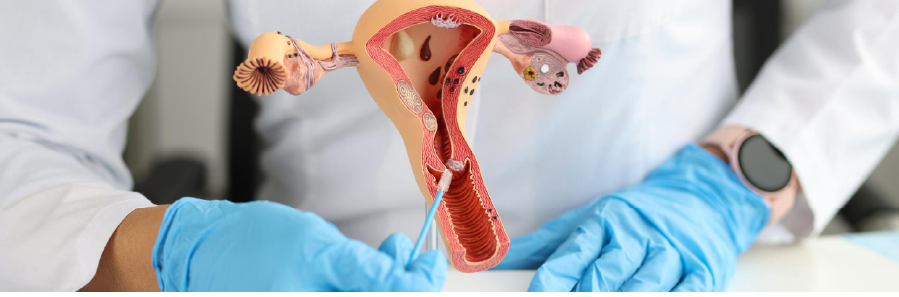
A Myomectomy is a surgical procedure to remove uterine fibroids (also known as leiomyomas, made up of connective tissue and muscle cells) from your womb. During the procedure, our surgeons carefully remove the fibroids but preserve the tissues in your uterus so that you can become pregnant in the future.
Myomectomy is an alternative to a hysterectomy, which removes your uterus, cervix, and fibroids.
Cocoon offers the latest minimally invasive “keyhole” techniques for uterine fibroid removal.
Benefits of Myomectomy
Here are the key benefits:
- Preserves the uterus.
- Preserves fertility, so an individual can still become pregnant after fibroid removal.
- Improves quality of life.
- Reduces pressure symptoms such as heavy menstrual bleeding, irregular bleeding, pelvic pain, etc.
- Faster recovery and minimal complications from using laparoscopic or robotic techniques.
Types of Myomectomy Methods at Cocoon Hospital
Our surgeons are experienced in performing all the methods to remove uterine fibroids:
| Method | How It Works | When It Is Used | Typical Recovery |
|---|---|---|---|
| Abdominal Myomectomy (Laparotomy) | The surgeon makes one larger incision in the lower abdomen to access the uterus and remove fibroids. | Larger, numerous, deeply located fibroids, or complex cases. | Longer recovery: typically 6–8 weeks or more. |
| Laparoscopic “Keyhole” Myomectomy | Small abdominal incisions are made, and the surgeon uses a laparoscope and specialized instruments to remove fibroids. | Medium-sized fibroids that are fewer in number and suitable for a minimally invasive approach. | Shorter recovery: usually 2–4 weeks for many patients. |
| Hysteroscopic Myomectomy | No abdominal incisions are required. The surgeon passes a thin scope through the vagina and cervix into the uterus to remove or shave off fibroids. | Fibroids located inside the uterine cavity (submucosal fibroids). | Quickest recovery: often 1–2 weeks. |
| Robotic Myomectomy | A minimally invasive procedure performed using a robotic-assisted system. The surgeon controls robotic arms with enhanced precision and 3D visualization. | Ideal for complex fibroid anatomy or when greater surgical precision is needed while preserving the uterus. | Recovery is similar to laparoscopic surgery: around 2–4 weeks. |
| Single-Port Myomectomy | The surgery is performed through a single opening near the belly button, allowing all surgical instruments to be inserted through one incision. This results in only one slightly larger incision and no additional abdominal cuts. | Suitable for selected patients with smaller or fewer fibroids who prefer minimal scarring. | Fast recovery, similar to laparoscopic surgery: about 2–4 weeks. |
When is Uterine Fibroids Removal Needed ?
Uterine fibroids are extremely common, and some don’t need any treatment. The treatment depends on a few factors, such as symptoms, size, location, and number of fibroids; desire to become pregnant in the future; or have a menstrual period.
Our experienced experts may recommend myomectomy surgery if you have uterine fibroids that are causing:
- Pelvic pain
- Irregular bleeding or bleeding between periods
- Heavy menstrual bleeding
- Not being able to fully empty your bladder
- Infertility
Uterine Fibroids Removal Procedures at Cocoon Hospital: Step-by-Step Approach
Here is what you can expect:
- Pre-surgical evaluation
Medical history, symptom review, pelvic exam, and imaging (ultrasound/MRI) to assess fibroids. - Choice of technique
Procedure (hysteroscopic, laparoscopic, or open) selected based on fibroid characteristics and fertility goals. - Anesthesia
Usually general anesthesia; some hysteroscopic cases use sedation. - Surgical procedure
Fibroids are removed while preserving healthy uterine tissue. - Post-operative care
Recovery monitoring, pain control, and guidance on activity restrictions. - Follow-up & fertility planning
Healing check-ups and advice on safe timing for pregnancy.
At Cocoon, experts prioritize minimally invasive keyhole techniques, as most patients can return to normal activities sooner with this.
Why Choose Cocoon Hospital for Uterine Fibroids Removal ?
Located at the heart of Chandigarh, Cocoon Hospital is the leading provider of gynaecological services, including myomectomy (uterine fibroid removal). We focus on a calm, private, and premium environment for women to empower them with the right environment and holistic support.
Our experts focus on combining minimally invasive “keyhole” cutting-edge technology tailored for every woman. Backed by a multidisciplinary team, we blend clinical expertise with a patient-centered approach for the best clinical outcome and recovery.
Heres why we stand out:
- Experienced gynaecologists with over 20 years of experience.
- Advanced diagnostic technology, including hysterosalpingography and 3D/4D imaging.
- Integrated care and supportive environment.
- Expertise in a fertility-preserving approach.
- Served more than 200,000 women.
- Performed 10,000+ gynaecological procedures.
Want expert care with faster recovery & minimal discomfort for uterine fibroid removal?
Speak to our experts for the right diagnosis and treatment at 09513174543.
What’s the difference between a Myomectomy and a Hysterectomy?
Here is the difference::
- Myomectomy surgery removes fibroids, keeping the uterus (womb) intact. Meaning, it preserves fertility.
- A hysterectomy removes the entire uterus. Fertility is not preserved.
Is a Myomectomy painful?
It is not painful during the procedure as performed under Anesthesia. However, pain can be felt during the recovery phase, which can be managed by following your doctor’s advice.
What are some of the risks of Myomectomy?
Myomectomy is a safe and effective procedure when done under professional guidance. However, like any other procedure, it can lead to the following complications:
- Allergic reactions to anesthesia
- Blood clots
- Bleeding
- Infection
- Damage to nearby organs
- Increased risk of needing a C-section delivery