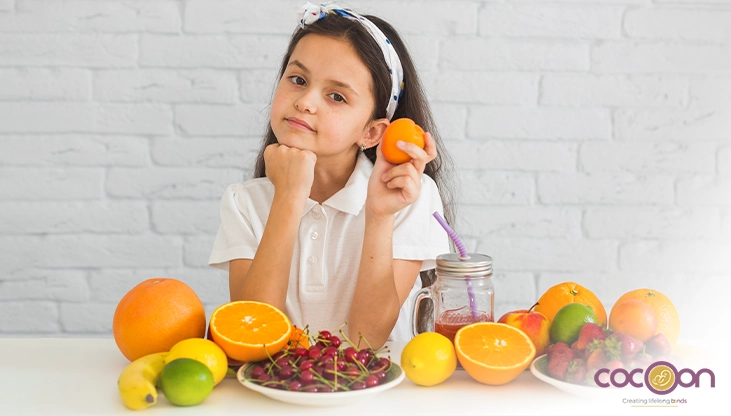
Many parents struggle with these common questions:
- How to know if a child is eating enough?
- What should be on a child's plate?
- How to encourage healthy eating habits in children without daily food battles?
The short answer is a child's nutrition need not be complicated. You don't need expensive superfoods that all the FMCG companies are claiming nowadays; all you need is a balanced, nutrient-rich diet that supports your child’s growth, brain development, immunity, and energy levels.
Your focus should be on developing your toddler's healthy eating habits they can carry into their teenage years and eventually adulthood.
The simple mantra is to make sure their meal consists of:
- Protein to build muscles.
- Calcium for stronger bones.
- Healthy fats to support optimal brain development.
- Fruits and vegetables for adequate vitamin and mineral intake.
Read this guide to know what a healthy diet for toddlers and teenagers looks like and what the practical meal tips are to make healthy eating easier for the whole family. For more info Best Pediatrician in Chandigarh.
Quick Overview: Child Nutrition
| Age Group | Main Focus | Daily Goal |
| 1–2 years | Brain growth. They are transitioning to household foods | Balanced diet, healthy fats, iron-rich foods |
| 2–5 years | Developing healthy eating habits | Fruits, vegetables, whole grains, dairy |
| 6–12 years | Growth and learning | Balanced meals, hydration, adequate protein |
| 13–18 years | Fast growth and development | More protein, calcium, iron; whole foods |
What Is Child Nutrition?
Child nutrition is defined as the nutritional status of children, especially during critical periods such as the first thousand days from conception to age two, which is crucial for growth, development, and lowering the risk of malnutrition-related mortality and disability.
Nutrition for kids is based on the same ideas as nutrition for adults. Everyone requires the same types of nutrients, such as vitamins, minerals, carbohydrates, protein, and fat. However, children require different amounts of specific nutrients at their respective ages.
To know the best eating pattern for your child's growth and development considers the following factors:
- Child's age
- Their activity level
- other characteristics
A proper balanced diet for children includes:
- Fruits
- Vegetables
- Whole grains
- Healthy proteins
- Dairy or calcium-rich alternatives
- Healthy fats
- Plenty of water
What is the Important Thing That Parents Should Keep in Mind About Child Nutrition?
Child nutrition is the process of giving your child the nutrients they need to grow, develop, stay active, and remain healthy.
Hence, do not focus on counting calories; instead, focus on:
- Food quality
- Food variety (colourful plate)
- Balance
Why Is Good Nutrition Important in Childhood?
A child's expert says that healthy eating during childhood supports the following:
- Healthy brain development
- Strong bones
- Build muscles
- Better concentration at study
- Healthy weight range
- Strong immune system
- Lower risk of obesity and type 2 diabetes later in life
- Better eating habits
Child Nutrition by Age
Let’s explore one by one:
Toddlers (1–3 Years)
Focus on offering:
- Soft fruits
- Cooked vegetables
- Eggs
- Yogurt
- Oatmeal
- Beans
- Whole grains
- Cheese
- Fish (when appropriate)
Toddlers need:
- Iron for brain development
- Calcium for bones
- Healthy fats for brain growth
- Protein for muscles
Do not force your kid to finish meals. Toddlers are generally good at recognising when they're hungry or full.
Preschool Children (2–5 Years)
Give them a wide range of colourful foods instead of preparing separate meals.
Here are the 5 helpful tips:
- Let them select between two healthy options.
- Encourage, not force, them to try at least a few bites of new foods.
- Set a regular meal timing.
- Limit sugary drinks.
- Give them seasonal fruit instead of sweets whenever possible.
School-Age Children (6–12 Years)
A healthy lunch might include:
- Whole-grain sandwich
- Lean chicken or beans
- Fresh fruit
- Carrot sticks
- Yogurt
- Water
Healthy snacks include:
- Apple slices
- Nuts (age appropriate)
- Greek yogurt
- Homemade popcorn
- Boiled eggs
Teen Nutrition (13–18 Years)
Their bodies require more:
- Protein
- Calcium
- Iron
- Whole grains
- Fruits
- Vegetables
What Does a Balanced Diet Look Like for a Child?
You can take guidance from following the healthy plate model:
| Portion | What to Include |
| Half the plate | Fruits and vegetables |
| One-quarter | Whole grains |
| One-quarter | Healthy protein |
| Side | Milk, yogurt, or other calcium-rich dairy |
| Drink | Water |
What Are the 6 Most Healthy Foods for Kids?
Here are the six best foods for child nutrition:
| Food Group | Healthy Choices |
| Fruits | Apples, bananas, berries, oranges, mangoes |
| Vegetables | Broccoli, carrots, spinach, peas, tomatoes |
| Whole Grains | Brown rice, oats, quinoa, whole wheat bread |
| Protein | Eggs, chicken, fish, beans, lentils, tofu |
| Dairy | Milk, yogurt, cheese |
| Healthy Fats | Nuts, seeds, avocado, olive oil |
How Much Veggies Your Kids Should Be Consuming Each Day
Here is the approximate amount according to the age limit:
- Ages 12–23 months: 2/3 to 1 cup each day.
- Ages 2–4 years: 1 to 2 cups each day.
- Ages 5–8 years: 1 1/2 to 2 1/2 cups each day.
- Ages 9–13 years: 1 1/2 to 3 cups each day for girls and 2 to 3 1/2 cups each day for boys.
- Ages 14–18 years: 2 1/2 to 3 cups each day for girls and 2 1/2 to 4 cups each day for boys.
How Much Protein Your Child Should Be Getting
Here is the approximate amount according to the age limit:
- Ages 12–23 months: 2 oz. each day.
- Ages 2–4 years: 2 to 5 oz. each day.
- Ages 5–8 years: 3 to 5 1/2 oz. each day.
- Ages 9–13 years: 4 to 6 oz. each day for girls and 5 to 6 1/2 oz. for boys.
- Ages 14–18 years: 5 to 6 1/2 oz. each day for girls and 5 1/2 to 7 oz. each day for boys.
Foods That Should Not Be a Part of Your Child’s Food Plate
Try to limit:
- Sugary drinks
- Soda
- Candy
- Packaged snacks
- Processed meats
- Deep-fried foods
- Excess salt
- Cakes and pastries
5 Practical Tips to Encourage Healthy Eating
Here are some habits that work:
- Eat together as a family at a scheduled time.
- Be a role model, as kids copy what their parents eat.
- Involve kids in grocery shopping, washing vegetables, mixing ingredients and choosing healthy snacks.
- Encourage them to stop eating when they're comfortably full.
- Fruit, yoghurt, nuts, cheese, vegetable sticks and homemade trail mix.
Conclusion
Think of your kid’s body similarly to a house under construction. Every meal offers the essential materials required to build a strong health foundation and then the whole framework.
That’s why ensuring an age-appropriate amount of protein, calcium, healthy fats, and fruits in their diet helps them become stronger over time.
Also avoid these common child nutrition mistakes:
| Mistake | Better Alternative |
| Using dessert as a reward | Treat all foods neutrally |
| Forcing children to eat | Encourage trying without pressure |
| Offering juice daily | Choose water and whole fruit |
| Skipping breakfast | Serve a simple balanced breakfast |
| Too many processed snacks | Offer fresh, whole foods |