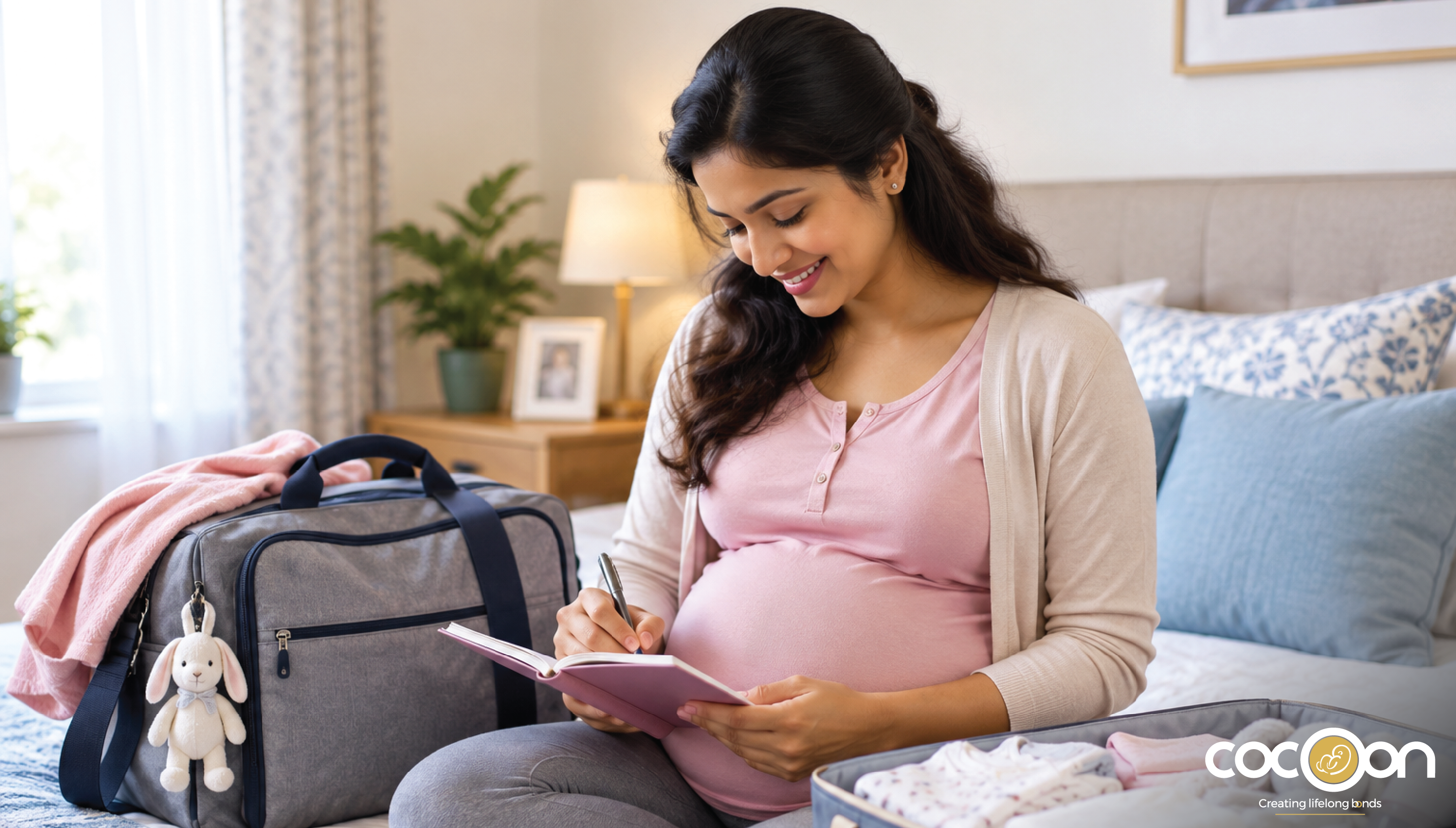
As the time approaches for the delivery of your baby, you might be pondering how to prepare for labour.
Here are the 2 things that you can do:
- Pack your hospital bag for delivery in advance.
- Make a simple delivery plan under the guidance of your doctor that covers pain relief, important documents, comfort items, and what your newborn might need.
Ideally, you should have your main bag ready by approximately 37 weeks, or earlier if your maternity team recommends it. At the same time, you can learn the signs of labor and discuss your preferences with your doctor.
You do not need to prepare for every possible scenario; instead, you should be flexible because birth does not always follow the plan.
Quick Overview: Labour Preparation
Read the table below to get a comprehensive idea of how to prepare for labour.
| Preparation | What to do |
| Hospital bag | Pack your essentials, baby items, and documents. |
| Birth plan | Note your preferences for pain relief, positions, feeding, and immediate newborn care. |
| Labour knowledge | Learn about contractions, cervical dilation, and the stages of birth. |
| Support | Make sure your birth partner knows where everything is. |
| Journey | Plan how you will reach your hospital or birth center. |
| Baby's return home | Install the car seat and keep newborn essentials ready. |
A simple approach is to prepare 3 small collections:
- Labour essentials – documents, comfortable clothes, a water bottle, a phone, and comfort items.
- Post-birth essentials – clothes, toiletries, maternity pads, and breastfeeding items if needed.
- Baby and partner items – newborn clothes, nappies, and your support person's essentials.
What Do I Actually Need in My Hospital Bag for Birth?
Your delivery checklist should comprise documents, clothing, and postpartum essentials.
Documents & Essentials:
- Hospital or maternity notes
- Identification and required hospital paperwork
- Birth plan, if you have one
- Regular medicines and medication information
- Important contact numbers
- Phone and charger
Clothing:
- Loose, comfortable clothes for labour
- Dressing gown
- Slippers or comfortable flip-flops
- Comfortable nightwear
- 3 changes of clothes
- Socks
- 5–6 pairs of comfortable underwear
- 2–3 comfortable bras or nursing bras
- Breast pads
Postpartum essentials:
- Super-absorbent maternity pads
- Toiletries
- Toothbrush and toothpaste
- Hairbrush and hair ties
- Soap or body wash
- Deodorant
- Lip balm
- Hand sanitiser
- Towels, if your hospital does not provide them
- Eye mask and earplugs or headphones
What to Pack for a Baby When Giving Birth?
Here is the list of things that your baby may need after delivery:
- Newborn bodysuits or vests
- Sleepsuits
- Going-home outfit
- Hat
- Socks or booties
- Scratch mittens if you plan to use them
- Nappies
- Cotton wool or suitable wipes
- Muslin squares
- Blanket or shawl
- Weather-appropriate outer layer
- Correctly fitted infant car seat for the journey home
A Few Suggestions for Your Birth Partner
- A change of clothes
- Toothbrush, toothpaste and deodorant
- Phone and charger
- Snacks and drinks
- Swimwear if they'll be getting in a birth pool
- Any medicines they're taking
- Camera or camcorder
- Spare glasses or contact lenses if they wear them
- Spare change for the car park and vending machine
Best Delivery Tips for Managing Labour
There is no single “best” method for managing labour pain for everyone.
Based on your situation and your healthcare team's advice, they may recommend:
- Walking
- Rocking or swaying
- Kneeling
- Squatting
- Leaning forward
- Changing positions regularly
- Massage
- Warm showers or baths
- A birthing ball
- Relaxation and breathing techniques
Pain Relief Options That You Can Consider
You can discuss the following pain relief options with your doctor before labour.
- TENS: A drug-free option. A TENS machine sends small amounts of electrical current through pads on your back to encourage your body to produce more of its own natural painkillers (endorphins).
- Gas and air: Nitrous oxide and oxygen inhaled through a mask or mouthpiece.
- Gas and air work swiftly (within 15 to 20 seconds) and may not take the pain away completely
- Opioid medication: Medicines such as pethidine may help with relaxation. However, they can lead to drowsiness and may not be suitable late in labour.
- Epidural: An epidural is a local anesthetic; it numbs the nerves that carry the pain impulses from the birth canal to the brain.
What should you include in your birth plan?
You can consider the following in your birth plan:
- Who you want with you
- Pain relief
- Labour positions and movement
- Monitoring preferences where appropriate
- Skin-to-skin contact
- Feeding your baby
- Delayed cord clamping
- What you would prefer if assisted delivery or caesarean birth becomes necessary
Conclusion
Labor can be unique to everyone. For some women, it's over in a matter of hours or less. For others, it may be longer and may test the limits of physical and emotional stamina.
It is impossible to predict how labor and childbirth will unfold until it happens. But by packing your pregnancy hospital bag in advance, understanding the basic stages of labor, and discussing pain-relief options, you can make the labor and delivery process a lot smoother.
Disclaimer: This blog is for informational purposes only. For accurate information about preparation for labor, contact your doctor.