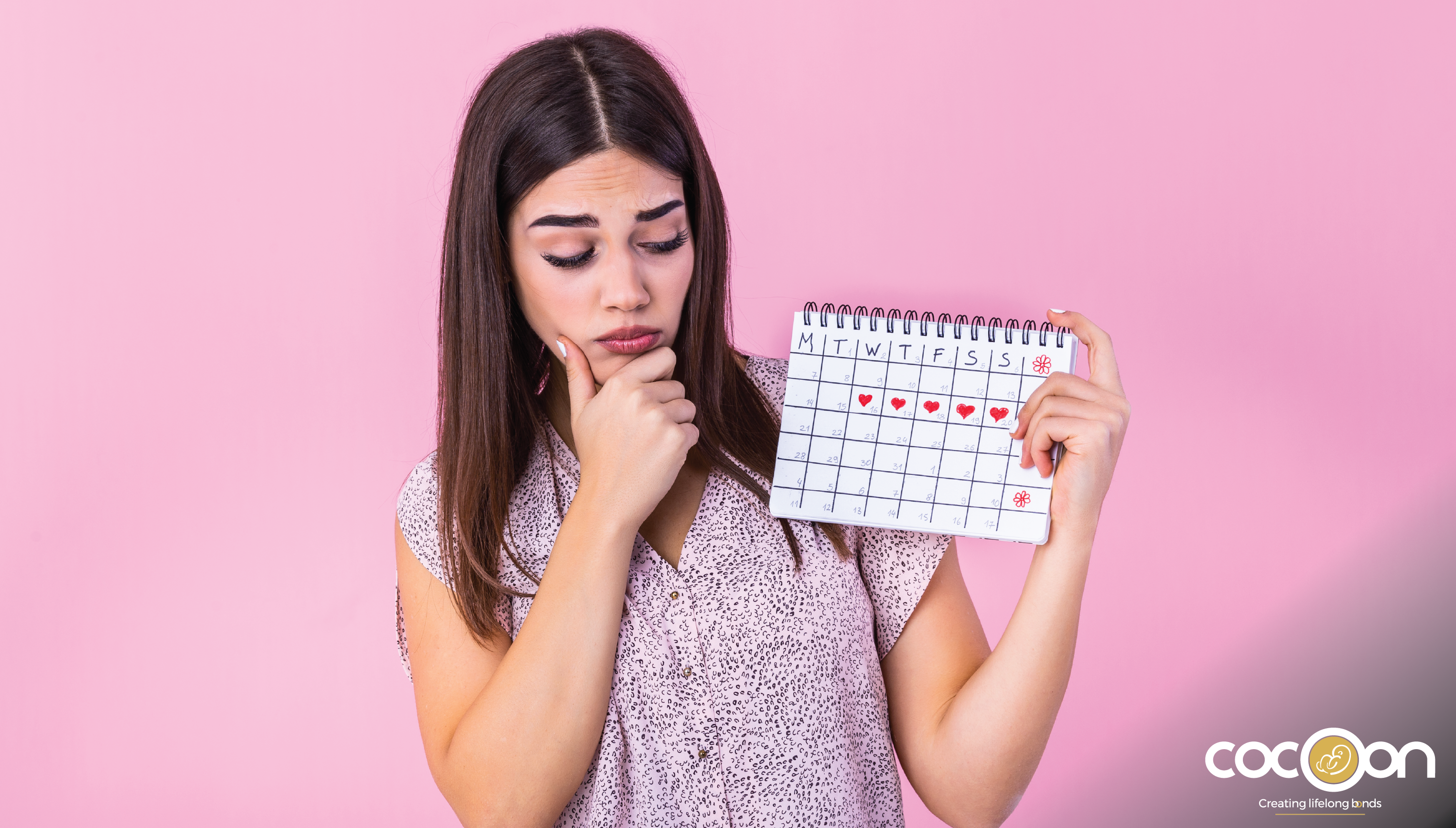
If your periods are not arriving when you expect them, lasting longer or shorter than they should be, or suddenly becoming much heavier or lighter, you might be wondering: Are these irregularities in my periods normal, or should I see a gynaecologist?
The answer depends on your usual menstrual pattern and what has changed. Occasional changes can be due to stress, weight fluctuations, intense exercise, hormonal contraception, puberty, or perimenopause. Once you address these factors, your periods can return to a normal pattern.
However, persistent irregular periods, repeated missed periods, unexplained bleeding, or trouble conceiving can sometimes point to an underlying condition such as PMOS, thyroid problems, or other hormonal problems. Therefore, contact your gynecologist if you have unpredictable periods; they’ll be able to tell you what’s normal and if treatment is needed.
What Are Irregular Periods?
Irregular periods mean that your menstrual cycle does not follow a predictable pattern for you.
A period usually occurs every 28 days, but normal menstrual cycles can range from 21 days to 35 days. A typical period usually lasts 3 to 7 days.
Your periods may be considered irregular if they:
- come earlier or later than expected
- are shorter or longer than usual
- are heavier or lighter than usual
| Menstrual pattern | What it may mean |
| Period every 21–35 days | Generally within the typical adult range |
| Occasional few-day variation | Often normal |
| Periods repeatedly more than 35 days apart | May indicate irregular cycles |
| Periods repeatedly less than 21 days apart | May need evaluation |
| No period for 3 months or more | Should be assessed, especially if not pregnant |
| Bleeding for more than 7 days | Worth discussing with a doctor |
| Bleeding between periods | Should be evaluated if persistent or unexplained |
What Causes Menstrual Irregularities?
There is no single cause. Multiple factors ranging from stress to more serious underlying medical conditions can lead to irregularities in the menstrual cycle.
Here are some of the most common causes.
1. Stress & Lifestyle Modification
Stress can affect the hormones involved in the process of ovulation (a phase in the menstrual cycle where your ovary releases an egg). Major emotional stress, inadequate sleep, sudden changes in routine, and extreme physical activity may make periods late, early, or absent.
2. Polyendocrine Metabolic Ovarian Syndrome (PMOS)
PMOS is the updated medical name previously known as Polycystic Ovary Syndrome (PCOS). It is one of the common causes of irregular periods that can interfere with regular ovulation. People with PMOS have periods that are widely spaced or sometimes absent.
Note: Irregular periods do not automatically mean you have PCOS. A gynaecologist needs proper examination and investigations to confirm the diagnosis.
3. Thyroid Problems
The thyroid gland produces hormones that influence various body functions, such as metabolism and reproductive health.
Both hypothyroidism (underactive thyroid) and hyperthyroidism (overactive thyroid) can affect your menstrual cycle.
Based on the condition, you may additionally experience symptoms such as:
- tiredness,
- changes in weight and mood,
- feeling unusually hot or cold, or changes in your heart rate.
4. Pregnancy
If you are sexually active, a missed period can be one of the earliest signs of pregnancy. Therefore, take a pregnancy test before assuming that stress or hormones are responsible.
5. Hormonal Contraception
Starting, stopping, or changing contraceptive pills, hormonal intrauterine systems, and contraceptive injections can temporarily alter your bleeding pattern.
6. Puberty & Perimenopause
Irregular periods are especially common when menstruation first starts because the reproductive hormone system is still developing.
During perimenopause (the time before menopause), ovulation becomes less regular, and the timing and flow of periods can change.
Symptoms of Irregular Periods
The symptoms of irregular periods depend on the underlying cause.
Common symptoms include:
- Missed periods
- Period more or less often than usual
- Periods that arrive unexpectedly early or late
- Heavy menstrual bleeding
- Very light bleeding
- Spotting (bleeding) between periods
- Painful periods or severe cramps
- Trouble predicting ovulation
- Fatigue, particularly with heavy bleeding
- Acne, excess facial hair, or weight changes when hormonal conditions are involved
How Are Irregular Periods Diagnosed?
If you notice changes in your menstrual cycle, make a habit of keeping records of when your periods start and stop.
To diagnose irregularities in the periods, your doctor may ask about:
- menstrual cycle
- when your periods became irregular
- medical history
- any medicines you take
They’ll perform a physical examination, including a pelvic exam, and might also order the following tests:
- Pelvic ultrasound
- Endometrial biopsy
- Hysteroscopy
FAQs
What is the best medicine for irregular periods?
There is no single "best" medicine for irregular periods.
The treatment depends on the underlying cause, such as endometriosis, PMOS, pelvic inflammatory disease, thyroid or pituitary gland disorders, etc.
Can I still get pregnant with an irregular period?
Yes.
However, women with irregular periods can face difficulty becoming pregnant depending on the underlying cause of the menstrual disorder.
Does an irregular period mean poor egg quality?
No.
An irregular period does not automatically mean poor egg quality.
It generally means your ovulation is unpredictable, delayed, or missing, which can make it harder to conceive.
Conclusion
Skipping one or two periods is not concerning. Reflect upon any changes you have made in your life recently. Things such as stress, a new workout routine, losing or gaining weight, or changing birth control can all impact your cycle.
If you are experiencing repeated missed periods, unusually heavy or prolonged bleeding, bleeding between periods, severe pain, or difficulty conceiving, consult a gynaecologist. They will help identify the underlying cause and provide you with the appropriate treatment.
Disclaimer: This blog is for educational purposes only. For accurate information about irregular periods, consult your doctor.