During pregnancy, one of the biggest questions that expecting parents usually have is, "Should we have a normal delivery or a C-section?”
The simple answer is that normal (vaginal) delivery is generally considered when it is safe for both mother and baby, but a C-section (or caesarean birth) may be the safer choice when complications make vaginal birth risky. An obstetrician in Chandigarh says no single delivery method is best because every pregnancy is different and depends on the situation.
Read this blog to understand the difference between normal delivery and C-section so that you can prepare for birth, discuss your options with your doctor, and make informed decisions about your care.
Normal Delivery vs. C-Section: What’s the Difference?
A normal delivery, also called a vaginal delivery, is when you give birth through your vagina. Your uterus (womb) contracts during labour to thin and open your cervix. Thereafter, you push your baby out via your vagina (birth canal).
A caesarean delivery is a surgical procedure used to deliver a baby when a vaginal delivery cannot be done safely. It can be planned or performed in an emergency.
Normal Delivery vs. C-Section
| Feature | Normal Delivery | C-Section Delivery |
| How baby is delivered | Through the vagina | Through surgical incisions in the abdomen and uterus |
| Labor | Usually involves labour and contractions | May be planned or performed during labour |
| Anaesthesia | May or may not be required | Usually spinal or epidural anaesthesia |
| Recovery | Generally faster | Generally longer |
| Hospital stay | Usually shorter | Usually around 3–4 days after surgery |
| Surgery involved | No | Yes |
| When preferred | When vaginal birth is safe | When vaginal birth is unsafe or not possible |
Both normal delivery and C-section methods can result in a healthy mother and baby.
However, the right approach depends on factors such as:
- Baby’s position
- Pregnancy complications
- Previous deliveries
- Maternal health
- Foetal well-being
- How labour progresses
What Is a Normal Delivery?
A normal delivery, or a vaginal birth, is the natural process of childbirth without surgical intervention.
Vaginal delivery is safest for the foetus and the mother when the newborn is full-term, at the gestational age of 37 to 42 weeks.
During a vaginal delivery, labour starts with uterine contractions which help the cervix become thinner and gradually open.
Once the cervix reaches about 10 cm dilation, the pushing stage begins. The baby passes through the birth canal and is delivered via the vagina. Afterwards, the placenta is delivered.
Vaginal deliveries are divided into 3 types:
- Spontaneous vaginal delivery (without the use of forceps, a vacuum device or a C-section).
- Induced vaginal delivery (use of medications or other techniques to trigger labour).
- Assisted (operative) vaginal delivery (use of forceps or a vacuum device to get the baby out)
Benefits of Normal Delivery
A vaginal delivery has several benefits to both the mother and the baby.
- Benefits for Mother: Faster recovery, shorter hospital stay, fewer surgical risks, and breastfeeding may begin sooner.
- Benefits for the Baby: A lower chance of breathing complications and better immune system function.
What Is a C-Section Delivery?
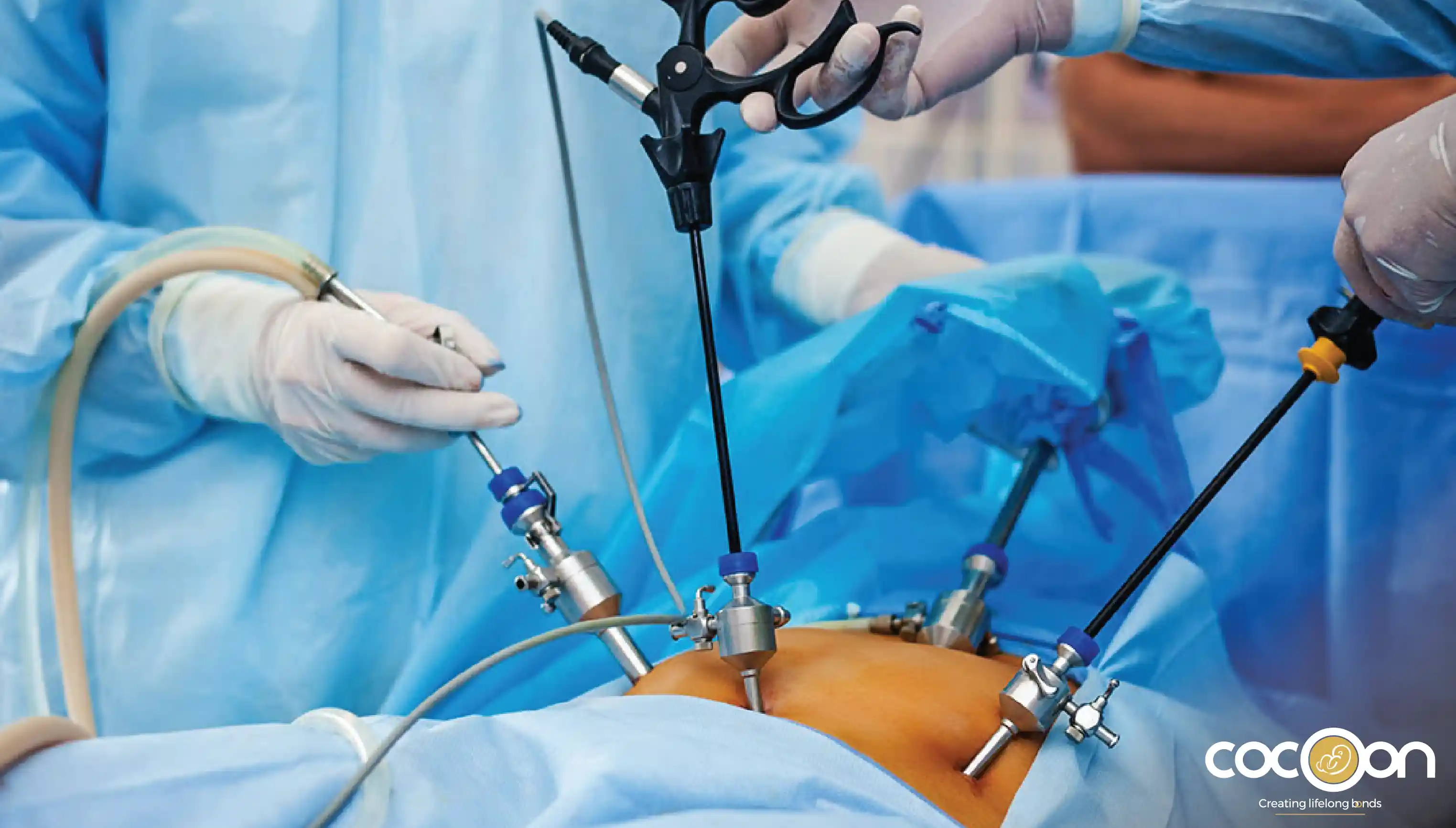
A C-section is surgery to deliver a baby via your abdomen and uterus (womb). C-sections can be considered when a vaginal delivery isn't possible or safe.
A C-section can be planned in advance or become necessary unexpectedly during labour. Most C-sections are performed using spinal or epidural anaesthesia (painless delivery), allowing the mother to remain awake while the baby is delivered.
A typical C-section may take approximately 45 minutes to 1½ hours, although an emergency C-section may be required to be performed much more quickly.
When Is a C-Section Necessary?
Your obstetrician in Chandigarh may recommend a C-section when:
- The baby’s head is too large to fit through your pelvis
- The baby is in a breech or transverse position.
- The placenta is blocking the cervix, as in placenta previa.
- Labour isn’t progressing.
- There are concerning changes in the baby's heart rate.
- The umbilical cord is looped around the baby’s neck or body or caught between the baby’s head and pelvis
- Placental abruption occurs.
- Expecting multiples.
- Certain maternal health conditions make vaginal birth unsafe.
- There is an active genital herpes infection that creates a risk during vaginal delivery.
- A previous C-section or other pregnancy factors make another approach more appropriate.
Normal Delivery vs C-Section: Which Is Safer?
For an uncomplicated pregnancy, vaginal delivery is usually considered safer and involves fewer surgical risks.
But it does not automatically mean that a vaginal birth is always the safest option.
For Example:
If the baby is in an unsafe position or there is foetal distress, attempting vaginal delivery could place the mother or baby at greater risk. In such medical scenarios, a C-section may provide the safest route to delivery.
| Situation | Possible Preferred Approach |
| Healthy pregnancy with no major complications. | Vaginal delivery may be preferred. |
| Baby is breech in certain circumstances. | A C-section may be recommended. |
| Placenta previa. | C-section is generally recommended. |
| Foetal distress requiring rapid delivery. | An emergency C-section may be needed. |
| Labour fails to progress. | Assisted delivery or C-section may be considered. |
| Previous C-section. | Individual assessment is required. |
| Multiple pregnancy, | Depends on babies' positions and other factors. |
Recovery: Normal Delivery vs C-Section
The recovery time in vaginal delivery is much shorter when compared to a C-section.
Here are the factors that can influence the recovery:
| Recovery Factor | Normal Delivery | C-Section |
| Surgical wound | No abdominal surgical wound | Abdominal and uterine incision |
| Initial soreness | Usually vaginal/pelvic soreness | Abdominal incision soreness |
| Recovery | Generally quicker | Generally slower |
| Activity restrictions | Usually fewer | More restrictions initially |
| Surgical complications | Not applicable | Infection, bleeding, blood clots and injury are possible |
Conclusion
The best approach to choosing between normal delivery and C-section is not to think of delivery as a competition between two choices. Instead, focus on what is safest for you and your baby.
The decision should always be based on your health, your baby's condition and the circumstances of your pregnancy.
Ask your obstetrician:
- Is vaginal delivery safe in my pregnancy?
- Is there any reason I may need a C-section?
- What is my baby's position?
- Are there any concerns about my placenta?
- How will you monitor my baby during labour?
- What happens if labour does not progress?
- What pain-relief options are available?
- If I have had a previous C-section, could VBAC be an option?
If you are looking for an obstetrician in Chandigarh, choose a qualified maternity specialist like those at Coccon Hospitals, who can evaluate your pregnancy rather than relying on general comparisons alone.
Disclaimer: This blog is for informational use. Contact a healthcare provider to know the best approach to choosing between normal delivery and C-section.